
Tabla de contenido
Online trading has become one of the most popular ways to generate income from home around the world. For those who live in Cuba, it represents a unique opportunity, but also a complex challenge due to the economic context and financial restrictions.
However, the situation is changing. In recent years, the Cuban government has begun to open up to cryptocurrencies and digital assets as a way to alleviate economic pressures. This article will guide you step by step for you to learn How to trade in Cuba Realistically, safely and with expectations adjusted to reality.
Can you really trade in Cuba?
Current situation of trading in Cuba
Today, trading in Cuba Yes it is possible, although not through the traditional channels accessed by a European or American. The main way to operate is through Cryptocurrencies and International brokers that accept funds in USDT (Tether) or Bitcoin.
Since 2021, the Central Bank of Cuba (BCC) regulates virtual assets in the country. In April 2022, the use of Bitcoin platforms under official licenses was authorized. And the most recent: in March 2026, the BCC authorized for the first time ten companies—nine MSMEs and a mixed one—to use cryptocurrencies for international payments. This marks a paradigm shift: the government not only allows, but is regulating and encouraging the use of virtual assets.
Real restrictions and limitations
That said, there are important limitations you should know about:
- The traditional banking system does not serve to deposit in brokers. No Cuban bank allows direct transfers to international trading accounts due to the economic blockade.
- Many global exchanges block Cuba. for example, Kraken It has a clear policy: it does not provide services to residents of Cuba.
- Internet connection can be unstable, which in short-term trading can be a serious problem.
- Electricity in Cuba is relatively cheap (Approximately 0.006 USD per kWh), but the actual cost of keeping a device on several hours a day can accumulate.
Why is it possible to trade today?
Despite the limitations, trading is viable for three reasons:
- International brokers are starting to accept cryptocurrency as a deposit method. This completely avoids the traditional banking system.
- P2P platforms as COINEX They have created a local ecosystem. More and more Cubans buy and sell USDT with each other using CUP or MLC.
- The government is giving clear signs of regulatory opening. Resolution 4/2026 is just the beginning.
What do you need to trade in Cuba?
Technical requirements
- Device: A computer with at least 4 GB of RAM is enough. You can also operate from a mid-range cell phone using mobile apps.
- Internet connection: You need stable connection. If you trade with short-term strategies (scalping or day trading), the latency should be low.
- Electrical Power: Although electricity in Cuba is cheap (0.720 cup per kWh), it considers the cost of having the equipment on and blackouts.
Recommended minimum capital
You don’t need big sums to get started. With 50-100 USDT (about 2,000-4,000 CUP in the informal market) You can open a demo account and then trade in real with controlled risks. some platforms like Qvafunded They offer access to capital for Cuban traders who do not have sufficient funds.
basic knowledge necessary
- Market concepts: What are currency pairs, leverage, margin, pip, spread.
- Technical analysis: Identify trends, supports and resistances, use indicators such as RSI or MACD.
- RISK MANAGEMENT: The most important. Know how much risk per transaction (never more than 1-2% of the capital).
How to start trading in Cuba step by step
Step 1: Learn the basics of trading
Before putting a single weight, dedicate at least 2-3 weeks to form you There are free high-quality courses, such as those offered by regulated brokers (for example, XTB It has a very complete trading education section). also platforms like Platzi They offer structured courses on trading and investment.
Step 2: Choose a broker that works in Cuba
This is the most critical step. Look for a broker that meets three conditions:
- Do not explicitly exclude Cuba in its terms of service.
- Allow deposits and withdrawals in cryptocurrencies (preferably USDT).
- Offer MetaTrader 4 or 5 (MT4/MT5) or a reliable own platform.
Step 3: Create a trading account
The registration process is usually digital and fast. you will need:
- valid email
- phone number
- Identity document (for verification)
Step 4: Verify your identity (KYC)
Most serious brokers demand the KYC (Know Your Customer). You will need to upload a photo of your identity card and sometimes a proof of residence. This is normal and necessary to operate in regulated environments.
Step 5: Deposit money from Cuba
This is where the most creative part comes in. Since Cuban banks cannot transfer directly to brokers, the standard path is:
- Buy USDT on a P2P platform (COINEX, for example).
- Send those USDT to your broker account.
- The broker converts the USDT to the base currency of your account (usually USD).
Step 6: Practice with a demo account
Don’t skip this step. All serious platforms offer demo accounts with virtual money. Use it for at least one month until you have consistency in your operations.
Step 7: Start trading in real with low risk
When you go to Real, start with the minimum possible. For example, if your broker allows you to trade from 0.01 batches, do it. The goal is not to make money at first, but Don’t lose it.
Best brokers for trading in Cuba
Features that a good broker should have
- Solid regulation: At least one license from a recognized authority (FCA, CYSEC, FSA).
- Low commissions and adjusted spreads: Especially important if your capital is small.
- Stable and easy to use platform: XStation, MT4 or MT5.
- Acceptance of cryptocurrencies as a deposit/withdrawal method.
- Customer service in Spanish and with accessible channels.
Confirmed brokers working from Cuba
Based on analysis of multiple sources, these are the most recommended:
| Broker | Regulation | Platform | Deposits in crypto | Available in Cuba |
|---|---|---|---|---|
| XTB | FCA, CYSEC, KNF | XStation 5 | Yes (USDT) | ✅ Confirmed |
| Multibank Group | ASIC, FSC | MT4, MT5 | Yes | ✅ Confirmed |
| Hantec Markets | FCA, FSA | MT4, MT5 | Yes | ✅ Confirmed |
| Axi | FCA, ASIC | MT4 | Yes | ✅ Confirmed |
XTB It especially stands out. It offers a robust platform, access to multiple markets, tight spreads and very few commissions, as well as useful educational resources. Its XStation 5 platform is easy to use and has good ratings in app stores (about 4.5 stars).
Brokers you should avoid
- Kraken: explicitly excludes Cuba. Do not waste time or money trying to register.
- Any broker without clear regulation offering ‘guaranteed earnings’. It’s almost always a scam.
How to deposit and withdraw money from Cuba
This is the most important section and also the one that generates the most doubts. The system works like this:
Use of cryptocurrencies as a bridge
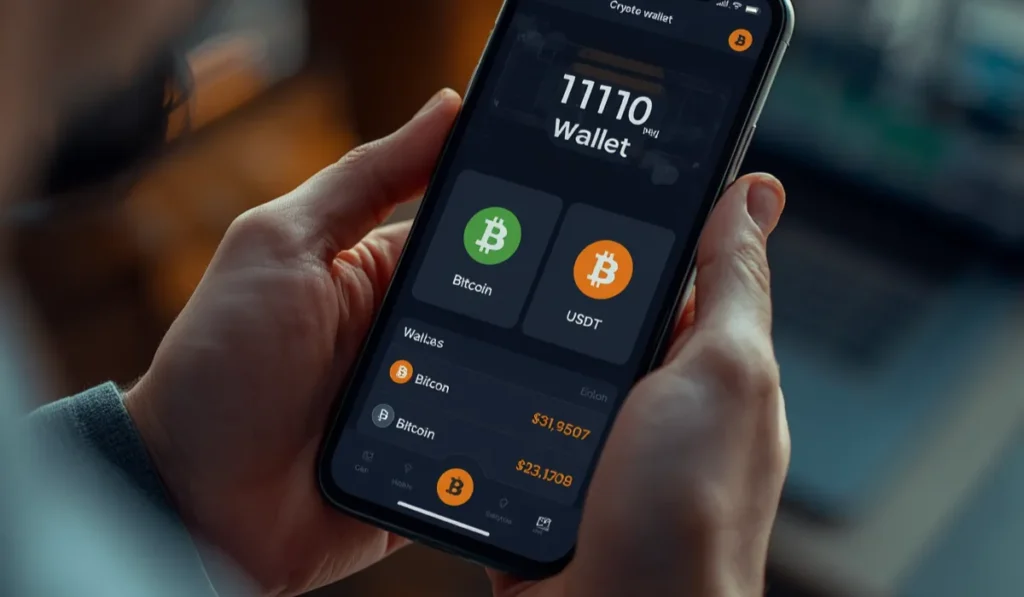
The entrance and exit path is always the same: Cryptocurrencies → P2P. There is no direct way with Cuban banks.
Recommended P2P platforms
- COINEX: It is the platform most used by Cubans. It has an active P2P market where you can buy and sell USDT using CUP or MLC. In addition, it recently enabled a P2P exchange system that allows transactions directly in CUP.
- Qvapay: Platform created specifically for the Cuban ecosystem. It allows you to convert crypto to fiat money and vice versa, and offers digital account services in dollars.
- localbitcoins and Paxful: They are international P2P platforms that also have users in Cuba.
Recommended digital wallets
- metamask: Ideal for tokens on the Ethereum network.
- Trust Wallet: Multiple chains and easy to use.
- Exodus: Friendly interface and support for many cryptos.
How to convert local money to crypto (step by step)
- You have CUP or MLC on your bank or magnetic card.
- You go to Coinex P2P and are looking for a seller who accepts national bank transfer or mobile transfer (enzona, transfermóvil).
- The seller blocks the USDT in a system of escrow (guarantee).
- You transfer the CUP/MLC by the agreed method.
- He confirms receipt and the system releases the USDT into your Coinex account.
- Now you have USDT in your wallet. You can send them to your broker to operate.
How to withdraw profits
The reverse process:
- You withdraw the USDT from your broker to your Coinex wallet.
- You publish a P2P sales order in Coinex.
- A buyer transfers CUP/MLC to your bank or mobile account.
- You release the USDT and receive the money in your account.
⚠️ Security warning: The P2P method carries risks. Always check the reputation of the seller/buyer. Never release escrow funds before confirming that the money has reached your account. If someone offers you a rate well above the market, it is almost certain that it is a scam.
Recommended Trading Strategies for Beginners
You don’t need a complex strategy to get started. In fact, simple strategies are usually the most effective for beginners because they emphasize simplicity and a lower frequency of operations, with strong risk controls.
Types of trading according to time
| Type | Duration | FREQUENCY OF OPERATIONS | Recommended for |
|---|---|---|---|
| scalping | seconds to minutes | Very high (tens a day) | Not for beginners |
| day trading | minutes to hours | average (several per day) | Beginners with time |
| Swing Trading | days to weeks | Low (few per week) | ✅ Highly recommended |
| position trading | weeks to months | very low | ✅ Recommended |
Simple strategies to get started
- Trend Tracking: operate in favor of the main trend. If the price is above the 200-period moving average, you only open long positions. If it is below, only short positions.
- Support and resistance strategy: Identifies clear levels where the price has bounced several times. Buy near the stand, sell near the resistance.
- Breakout strategy: When the price breaks a level of support or resistance with high volume, you go in the direction of the break.
Importance of risk management
Risk management is not optional; It is the difference between a surviving trader and one that burns his account. Learning to control losses and defining position size is critical to reducing exposure in volatile markets.
Basic rules:
- Never risk more than 1-2% of your capital per trade.
- Always use stop-loss. Without stop-loss, there is no operation.
- Risk/Benefit Ratio: Look for at least 1:2 (risks 1 to win 2).
How much money do you need to start and earn in Cuba
Realistic minimum capital
With 50-100 USDT You can start trading in Real with a very low risk. Some brokers allow you to open accounts from 10 USD. However, keep in mind that one of the main barriers to the Cuban trader is not knowledge, but access to capital.
earnings expectations
Here goes the reality: You won’t get rich in a month. Trading is not fast money. Most professional traders have an annual return of 10-30% on their capital. To put it in perspective:
- If you start with 100 USDT, a realistic monthly profit (with good management) would be 5-10 USDT.
- For trading to be a significant income in Cuba, you would need a capital of at least 2,000-5,000 USDT.
There are alternatives like Qvafunded, a funding firm created by a Cuban who seeks to provide opportunities to those who want to develop as traders but lack sufficient funds. They allow you to trade with the firm’s capital in exchange for sharing a percentage of the profits.
How long does it take to be profitable?
- 3-6 months: Practicing in demo and learning.
- 6-12 months: Starting to see consistency in real with small profits.
- 12-24 months: Possibility to be consistently profitable.
There are no shortcuts. The trader who expects quick profits is the one that ends up losing his money.
Common mistakes when trading from Cuba
wrongly choose the broker
Many Cubans waste time and money by registering in brokers who then block their withdrawals or simply do not accept their country. Always check the terms of service and seek reviews from other Cuban users.
Do not train before investing
Going directly to operate in Real without having practiced in demo is the fastest way to lose capital. Education is paramount.
Do not manage risk
Operating without stop-loss or risking large percentages of capital per trade is a deadly mistake. Risk management adapts to the strategy and the context, but should never be omitted.

Believe it’s fast money
Trading is not a lottery. If someone promises you ‘guaranteed earnings’ or ‘infallible signals’, he is lying. Making money with trading is not a matter of luck, but of discipline, training and consistency.
Use unsecured networks
P2P operations with strangers can be dangerous. Always use escrow systems, check the other user’s reputation, and don’t share sensitive banking information off the platform.
Final tips for successful trading
correct mentality
- Trading is a business, not a game. Treat it with the seriousness it deserves.
- Accept losses as part of the process. Even the best traders lose 40-50% of their trades.
- Don’t trade for emotions. Fear and greed are the trader’s worst enemies.
discipline and perseverance
- Operate with a plan. Define in advance input, stop-loss and take-profit. Don’t improvise.
- Keep an operations journal. Write down each operation: what you did, why and what result it had. It is the best learning tool.
- Don’t change your strategy every other day. Consistency comes from mastering a strategy, not jumping from one to another.
continuous training
Markets change, and you must change with them. Take time each week to study new concepts, review your operations and learn from your mistakes.
Frequently Asked Questions about Trading in Cuba
Is it legal to trade in Cuba?
Yes, trading itself is not illegal. The Central Bank of Cuba has regulated virtual assets since 2021 and has issued licenses to virtual asset service providers. BCC Resolution 4/2026 confirms that the government is making way for the use of cryptocurrencies in business transactions. What is important is that you declare your income if trading becomes a significant source of profit.
What are the best platforms available?
- For traditional trading: XTB, Multibank Group, Hantec Markets, Axi.
- To buy/sell crypto on P2P: COINEX (the most used by Cubans), Qvapay.
- For funding (if you don’t have capital): Qvafunded.
What payment methods are used the most?
- To buy crypto: National bank transfers (CUP, MLC), Transfermóvil, Enzona.
- To withdraw profits: the same reverse process. The money comes to your Cuban bank account or your magnetic card.
Is it possible to live from trading in Cuba?
Yes, but it is not easy or fast. To live from trading you need:
- A considerable capital (minimum 5,000-10,000 USDT recommended).
- A proven and consistent strategy (minimum 12-24 months of experience).
- Impeccable risk management.
- The ability to generate stable income month by month.
For most people, trading is a COMPLEMENTARY INCOME, not a main source. It can be a great way to generate an extra in currencies, but it is not a substitute for a stable job or business.

Do I need to pay taxes for my earnings in trading?
Cuban tax legislation on virtual assets is still under development. Since the government is progressively regulating the sector, it is likely that tax obligations will be established in the future for profits obtained through trading. For now, the most prudent thing is to keep a detailed record of your operations and profits in case any statement is required in the future.
Can I operate with leverage from Cuba?
Yes, most international brokers offer leverage (from 1:10 to 1:500). However, for beginners it is recommended to use low leverage (1:10 or 1:20) or not use it directly. Leverage amplifies both gains and losses.
final conclusion
Trading in Cuba is possible, but requires a different approach from the rest of the world. The path inevitably passes through cryptocurrencies and P2P platforms, avoiding the traditional banking system.
The key to success is not in finding the ‘magic broker’ or the ‘secret strategy’, but in Properly train yourself, manage risk with discipline, and have realistic expectations. You won’t get rich in a month, but with time, perseverance and good management, trading can become a valuable source of additional currency income.
It starts little by little. Use the demo account until you feel comfortable. Then, it operates in real with the minimum possible capital. Accept loss as part of learning. And never, never, invest money that you cannot afford to lose.
Trading is a marathon, not a sprint. And in Cuba, with the right tools and the right mindset, you can also run.
Has this guide been useful to you? Share it with other Cubans interested in trading and help us build an informed and responsible community.