
Tabla de contenido
What is SEO? If you have a website, blog, or online business, this is the most important question you can ask about your digital presence.
What is SEO? In simple terms, SEO (Search Engine Optimization) is the process of optimizing your website to improve its visibility in unpaid organic search results on Google, Bing, and other search engines. The goal is to attract high-quality traffic by ranking for keywords that your ideal customers are searching for.
What is SEO and how does it work? Search engines like Google use automated programs called crawlers or bots to discover, index, and rank web pages. When someone performs a search, Google’s algorithm evaluates hundreds of ranking factors – from relevance and content quality to technical performance and backlinks – to deliver the best possible answer.
In 2026, understanding what is SEO has become more complex with the rise of Generative AI (SGE, AI Overviews) and Google’s renewed focus on E-E-A-T (Experience, Expertise, Authority, Trust). This guide will walk you through everything you need to know.
The Essential Fundamentals of What SEO Is and How It Works
In its purest essence, SEO (Search Engine Optimization) is the discipline that seeks to improve the visibility and accessibility of a website in the unpaid organic results from engines like Google, Bing, or DuckDuckGo. Its ultimate goal is to connect the user’s search intention with the most useful, relevant, and highest-quality content available on the web.

What is SEO and how does it work? The functioning of SEO is a constant dialogue between your site and search engine algorithms. This process is based on three interdependent pillars:
Technical SEO
Technical SEO is the foundation. It includes all the aspects that make it easier for search engines to crawl, index, and understand your site efficiently. This includes:
- Loading speed (defined by Core Web Vitals metrics: LCP, INP, and CLS)
- Mobile adaptability (mobile-first indexing)
- Security (HTTPS)
- Logical site architecture
- Structured data implementation (Schema.org)
Content SEO
Content SEO is the central value and the reason your site exists. It focuses on creating material that fully meets the user’s needs. This requires:
- Deep keyword research to understand search intent
- Creation of original, high-quality content
- Clear structuring with proper H1-H6 headers
- Concise paragraphs and multimedia resources
Off-Page SEO
Off-page SEO represents your reputation on the web. It is the external signal that tells Google about the authority and reliability of your site. The best-known factor is building quality backlinks from other authoritative websites, which act as “votes of trust.” This also includes brand mentions, social signals, and business directories.
To verify the technical health of your site, the fundamental free tool is Google Search Console. It allows you to monitor crawling errors, indexing status, and your performance in search results.
For a full technical analysis, you can also use our SEO audit tool or estimate your potential ROI with the SEO calculator.
The New Fundamental Pillar: E-E-A-T, Google’s Quality Compass
If there is one concept that defines the evolution of SEO in 2026, it is E-E-A-T (Experience, Expertise, Authority, and Trust). Introduced in Google’s Search Quality Evaluator Guidelines, this framework is not a direct ranking factor but acts as the gold standard that guides algorithms to evaluate content quality and reliability.

In an internet saturated with surface-level content and automatically generated AI material, E-E-A-T is Google’s mechanism to prioritize human value and authenticity. Its importance is critical for YMYL topics (“Your Money or Your Life”) that affect health, finances, safety, or well-being.
Experience
Google increasingly values content created from first-hand experience. It’s no longer enough to write “about” something; you need to show that you have “lived” or “applied” it.
How to prove it: Include real case studies with specific data, process screenshots, step-by-step tutorials based on your own tests, and stories of lessons learned.
Expertise
Expertise reflects the depth of knowledge and competence on a subject matter.
How to prove it: Cite studies, data from official sources, and links to authoritative resources. Include author bios with credentials and years of experience.
Authority
Authority means being recognized as a reference source in your sector or niche, both by users and other websites.
How to prove it: Build authority over time by earning backlinks from relevant media, mentions in studies, and creating a solid body of recognized work.
Trust
Trust is the cornerstone. A site must transmit security, transparency, and reliability.
How to prove it: Have clear contact information, transparent privacy policies, an updated HTTPS certificate, and visible publication dates. Genuine reviews also build trust.
For the official guidelines, visit: Google Search Quality Evaluator Guidelines
The Great Disruption: How AI Is Redefining How SEO Works
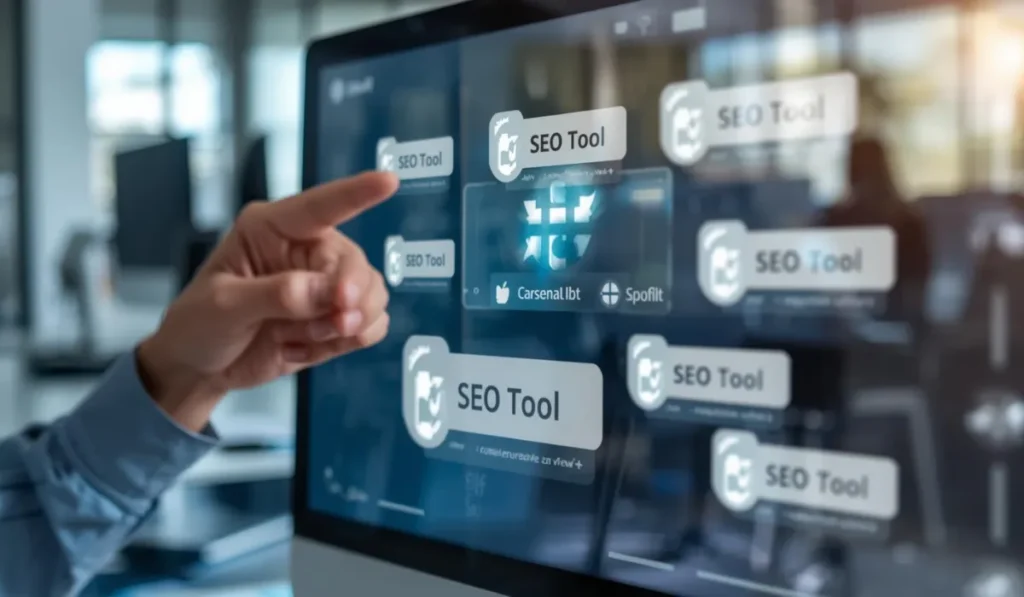
The current landscape is dominated by a radical change: the integration of generative artificial intelligence directly into search results. Google, with its Search Generative Experience (SGE) and AI Overviews, no longer limits itself to showing a list of links but synthesizes information and generates complete answers on the results page itself.
This evolution has profound consequences for SEO:
The Rise of “Zero-Click Searches”
With generative responses, a growing percentage of queries are resolved on the same Google results page without the user needing to click an external link. This creates downward pressure on traditional CTR (click-through rate), especially for simple informational queries.
The New Strategic Objective: Being Cited, Not Just Clicked
Success is no longer measured solely by traffic that comes to your site but by becoming the source that AI cites in its generated response. This has given rise to emerging disciplines like GEO (Generative Engine Optimization).
How to Optimize for This New Paradigm (AEO – Answer Engine Optimization)
- Structure for extraction: Use clear headers (H2, H3) that ask direct questions and provide concise answers right after
- Implement structured data: Schema Markup (FAQ, HowTo, Article) helps AI understand your content
- Prioritize comprehensiveness and freshness: Cover all angles of a topic and keep content rigorously updated
- Focus on “AI-proof” formats: Create original data analysis, expert opinions, and unique case studies
Advanced SEO Strategies to Succeed in 2026
Adapting requires going beyond traditional practices. Here are the key strategies:
Build Topical Authority Through Topic Clusters
Authority is no longer earned with isolated articles but by demonstrating deep and exhaustive knowledge about a broad topic. The topic cluster strategy consists of:
- Create a pillar page: An extensive, definitive content piece that addresses a main topic comprehensively
- Develop multiple satellite pages: Specific content that deepens individual subtopics, each optimized for long-tail keywords
- Strategic interlinking: Link all satellite pages to the pillar page (and vice versa) using contextual internal links
Learn more about general SEO fundamentals in our SEO guide.
Prioritize User Experience (UX) and Human Content
Faced with the proliferation of generic AI content, your greatest competitive advantage is authenticity and human experience.
- Content based on real experience: Tutorials with your own screenshots, original data analysis, and real case studies
- Investment in multimedia: Video is crucial. YouTube is the second-largest search engine
- Impeccable technical speed and UX: Core Web Vitals and mobile adaptation are not optional
Take a Holistic Approach: Technical, Content, and Local SEO
- Proactive technical SEO: Planned site architecture, optimized robots.txt and sitemap.xml, proper canonical tags
- Content SEO with purpose: Each piece of content should serve a clear objective and support topic cluster strategy
- Local SEO (dedicated section): See Section 5 below
For WordPress users, check our guide on the best SEO plugin for WordPress.
What Is Local SEO? A Complete Sub-Guide for Local Businesses

What is local SEO? Local SEO is a specialized branch of SEO that helps businesses with physical locations or service areas appear in geographically-targeted search results. While what is SEO globally focuses on ranking for any keyword, local SEO focuses specifically on searches with local intent like “near me” or city-specific queries.
Local SEO Definition
A clear local seo definition is: the practice of optimizing a business’s online presence to attract more customers from relevant local searches on Google and other search engines.
If you want to understand local SEO, think of it as digital word-of-mouth. When someone searches for “best coffee shop in Austin” or “plumber open now,” local SEO determines which businesses appear in the Local Pack (the top 3 map results) and on Google Maps.
How Local SEO Works
How local SEO works involves a specialized Google algorithm that evaluates three main signals:
- Proximity: How close your business is to the searcher’s location
- Relevance: How well your business matches the search query (categories, keywords, attributes)
- Prominence: How well-known and trusted your business is (reviews, backlinks, citations)
Key Local SEO Ranking Factors
- Google Business Profile (GBP): Complete optimization is the #1 factor
- Customer reviews: Volume, recency, diversity, and owner responses
- NAP consistency: Name, Address, Phone must be identical across all web directories
- Local citations: Listings in local business directories
- Local backlinks: Links from local newspapers, blogs, and organizations
How to Improve Your Local SEO
- Optimize your Google Business Profile completely
- Ensure SEO for business in the United States includes local strategies
- Get more customer reviews and respond to all of them
- Build local citations and clean up NAP inconsistencies
- Create location-specific content on your website
For a complete deep dive, visit our dedicated guide: What is Local SEO? – The #1 Guide to Rank Locally & Get Customers.
When traditional and local SEO work together, SEO agencies can help businesses maximize their visibility across both global and local search results.
The Must-Have SEO Toolkit for 2026
Executing these strategies requires the right tools. The offering has evolved toward comprehensive platforms and specific solutions for AI and advanced analytics.
All-in-One Platforms for Analysis and Strategy
| Tool | Best For | Key Feature |
|---|---|---|
| SEMrush | Complete SEO suite | Competition analysis, technical audit, rank tracking, AI performance monitoring |
| Ahrefs | Backlink analysis | Largest and most accurate link database |
| SE Ranking | SMEs and consultants | Affordable, robust rank tracking and audits |

Content and UX Optimization Tools
- Surfer SEO or Clearscope: Analyze top-ranking pages and offer real-time structure recommendations
- Google Search Console: Free, indispensable tool for performance data and indexing errors
- Google Analytics 4 (GA4): Measure user behavior, organic traffic, and conversions
Technical SEO Tools
- PageSpeed Insights: Measure Core Web Vitals (LCP, INP, CLS)
- Screaming Frog: Crawl your site to find technical issues
- SEO audit tool: Comprehensive site analysis
Local SEO Tools (if you have a local business)
- BrightLocal: Citation tracking, review monitoring, local rank tracking
- Whitespark: Citation building and NAP audits
- Google Business Profile dashboard: Free, essential for local management
Free Educational Resources
- Google SEO Starter Guide – Official documentation
- Wikipedia: Search Engine Optimization – General overview
- Reddit r/SEO – Community discussions and case studies
For affordable hosting that supports SEO speed requirements, check out Hostinger.
SEO Timelines: How Long Does It Take to See Results?
A common question after learning what is SEO is: “How long does it take to work?”
The first significant results of an SEO strategy are usually seen between 3 and 6 months, while reaching high and stable positions in competitive markets can take 6 to 12 months or more.
This timeline reflects the time search engines need to discover, evaluate, and build trust in your website.
SEO Lifecycle Roadmap
| Phase | Timeline | Key Activities |
|---|---|---|
| Months 1-3 | Audit & foundations | Technical fixes, keyword research, basic on-page optimization |
| Months 4-6 | First results | Increased traffic for long-tail keywords, initial ranking improvements |
| Months 7-12+ | Authority building | Content clusters, backlink acquisition, competitive keyword ranking |
For a complete timeline analysis, read our detailed guide: How Long Does It Take to See Results with SEO.
Common SEO Mistakes That Delay (or Reverse) Results
- Ignoring technical SEO and Core Web Vitals: The most costly mistake
- Creating content without a strategy: Surface content or ignoring search intent won’t rank
- Keyword cannibalization: Multiple pages competing for the same query confuses Google
- Toxic or artificial link building: Can generate manual penalties
- Lack of consistency and unrealistic expectations: SEO requires patience
How to Measure SEO Success: KPIs and Essential Metrics
| KPI | Tool | Why It Matters |
|---|---|---|
| Organic traffic | Google Analytics 4 | The primary metric; should show upward trend |
| Average position | Google Search Console | For target keyword groups |
| CTR (click-through rate) | Google Search Console | Indicates if titles and meta descriptions are attractive |
| Conversions | Google Analytics 4 | Does organic traffic generate leads or sales? |
| Backlinks & authority | Ahrefs (free tier) | Growth in quality inbound links |
Conclusion: The Future of SEO Is Demonstrable Authority

Understanding what is SEO and how SEO works in 2026 means accepting that the rules have changed forever. Isolated optimization techniques or mere backlink accumulation are no longer enough.
The core of success lies in building indestructible digital authority, based on E-E-A-T principles and demonstrated through deep content strategy, exceptional user experience, and proactive adaptation to AI-driven search formats.
The future belongs to brands and creators who can demonstrate real experience, deep knowledge, and unshakable trust. Those who become such valuable and credible sources that AI algorithms and users will choose them systematically – with or without a click.
Adaptation to this new paradigm is not optional. It is the essential roadmap for visibility, relevance, and ultimately sustainable success in the next decade of the web.
Your future customers are already searching. Make sure they find you.
Frequently Asked Questions (FAQ) About SEO
What is SEO in simple terms?
What is SEO? In simple terms, SEO is the process of making your website more visible on Google when people search for products, services, or information related to your business.
How does SEO work?
How does SEO work? Search engines use crawlers to discover web pages, then algorithms rank them based on relevance, content quality, backlinks, technical performance, and user experience signals.
What is the difference between SEO and local SEO?
What is local SEO compared to traditional SEO? Traditional SEO targets global or national keywords, while local SEO focuses on geographic searches like “near me” or city-specific queries. See Section 5 above for a complete local seo definition.
Can I do SEO myself?
Yes, you can start with the basics. For competitive markets, professional help from SEO agencies can accelerate results.
How much does SEO cost?
Costs vary widely: from $500–$2,000/month for local SEO to $5,000–$10,000+/month for enterprise national strategies.
Is SEO better than Google Ads?
They serve different purposes. SEO builds long-term sustainable traffic; Google Ads provides immediate visibility. The best strategy combines both.
Does AI make SEO obsolete?
No. AI changes how SEO works but makes human expertise, experience, and authority (E-E-A-T) more valuable than ever.
Additional Resources from Rankuba SEO
- SEO | Web Positioning Guide – General SEO fundamentals
- What is Local SEO? – Dedicated local SEO guide
- Set Up Google My Business – Step-by-step GBP guide
- How Long Does It Take to See Results with SEO – SEO timeline analysis
- SEO for Business in the United States – US market strategies
- Hreflang Errors Fix for WordPress – Multilingual SEO
- SEO Agencies – How to choose the right partner
- Best SEO Plugin for WordPress – WordPress optimization
Free Tools
- SEO Audit Tool – Comprehensive site analysis
- SEO Calculator – Estimate your potential ROI
- Crypto Resources – Specialized content