Tabla de contenido
Introduction
According to the National Association of REALTORS® (NAR), 100% of buyers now use the internet at some point during their home search. Your website is no longer a digital brochure—it’s the heart of your business and often the first impression potential clients have of you. Research shows that 94% of first impressions relate to web design, and 75% of people use a website’s design as a credibility indicator.
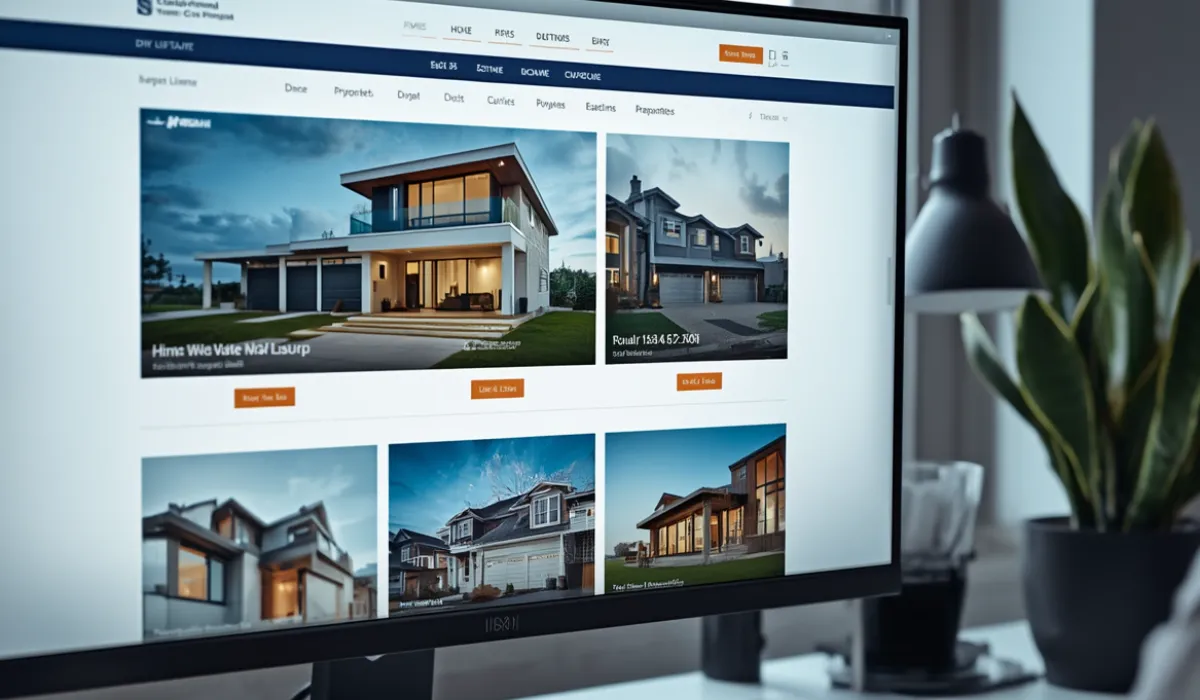
A well-designed real estate website does more than just display properties. It builds trust, generates leads, and positions you as the go-to expert in your market. This guide covers everything you need to know about real estate website design in 2026—from essential features and best practices to real-world examples and conversion strategies that actually work.
What Makes a Strong Real Estate Website?
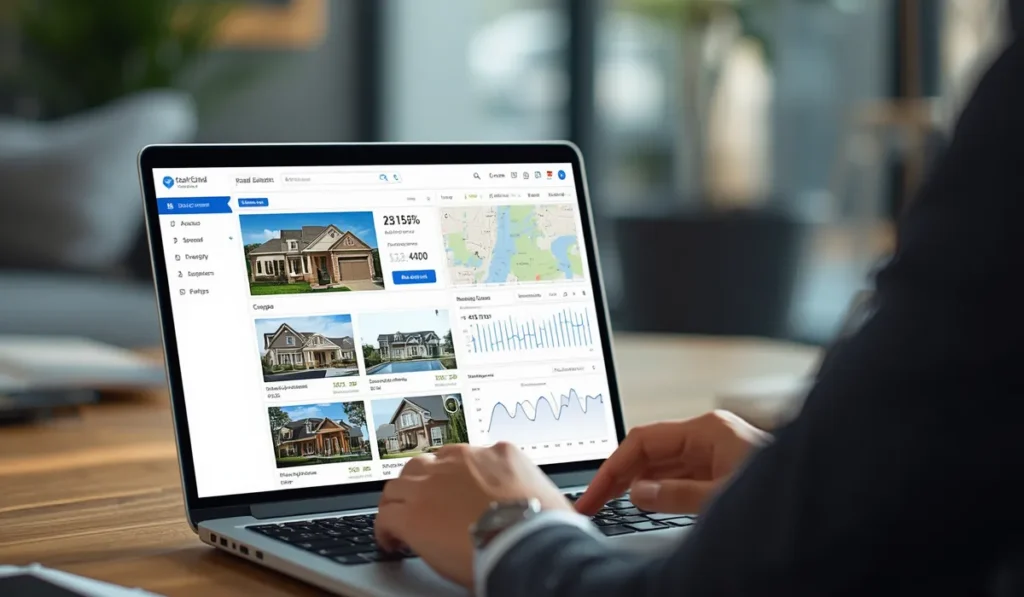
Before diving into specific features, it helps to understand what a high-performing real estate website is actually supposed to do. Most agents think of their site as a place to display listings and share contact details. The better way to think about it is as a lead generation system with your face on it.
Top real estate websites do four things well:
- They get found — Buyers and sellers search online before they call anyone. Your website needs to show up in Google, AI search tools, and local results. Understanding what is SEO is the first step to making that happen.
- They keep people engaged — Once someone lands on your site, they should find something useful enough to stay.
- They capture contact information — Every page should have a way for visitors to identify themselves.
- They build trust — Reviews, agent expertise, past sales data, and professional visuals all tell visitors you’re the real deal.
Essential Features of a High-Converting Real Estate Website
IDX/MLS Integration
IDX (Internet Data Exchange) is the technology that lets you display live MLS listings directly on your website. It’s the single most important feature for a real estate agent website and the one that most clearly separates a purpose-built site from a generic one.
Without IDX, your website is just a brochure. With it, your site becomes a functional search tool with the same data buyers would find on Zillow—but served from your own domain, with your branding and lead capture in place.
iFrame vs. Native IDX Integration: There’s an important technical distinction here. iFrame IDX loads listing data from the vendor’s servers, meaning your domain earns zero SEO authority from those pages. Native IDX integration serves listing data from your own domain, meaning every listing page builds authority for your site over time. If your current IDX solution uses an iframe, you’re missing significant SEO value.
85% of real estate agents market their homes via MLS websites, making this integration essential for any serious real estate website design.
Advanced Property Search Filters
Buyers increasingly expect to filter by more than just city, price, or number of bedrooms. School district, commute radius, HOA presence, lot size, waterfront access, recent price reductions, and days on market are all filters that buyers regularly use.
Advanced filters can significantly improve lead quality. The more granular the search, the more a buyer can self-qualify—arriving at a listing already knowing it meets their criteria, rather than sifting through results that only partially fit.
Interactive Map Search
Map-based search lets buyers explore neighborhoods visually, seeing where a property sits in relation to schools, transit, parks, and local amenities. Nearly 46% of mobile real estate visitors expect a map integration to see nearby listings.
Interactive maps with clickable listing pins, the ability to draw custom search boundaries, and neighborhood overlays are among the features most likely to increase time on site.
Detailed Listing Pages
Once a visitor clicks on a property listing, the detail page needs to give them everything they need to decide whether to take the next step. Beyond photos, 86% of buyers say detailed property information is the most important feature in their online search, and 93% want floor plans when available.
A strong listing detail page includes:
- High-resolution professional photos
- Video tour or 3D walkthrough
- Full property details (square footage, lot size, year built, HOA fees, taxes)
- Neighborhood context and school district information
- A mortgage calculator
- A clear CTA to schedule a showing or ask a question
The goal is to answer every question a buyer might have before they need to call.
Saved Searches and Listing Alerts
Saved searches and email alerts turn a one-time visitor into a recurring one. When a buyer saves a search and receives automatic notifications when new listings match their criteria, they come back to your site every time something relevant hits the market.
This feature requires users to create an account or complete an email capture step, making it one of the most effective passive lead generation tools on any real estate website. Someone who registers to save a search is a warm lead—they’ve identified themselves, shared their criteria, and agreed to be contacted by you.
Lead Capture Forms and CTAs
Converting leads is necessary to grow your business. The most effective lead capture is contextual and provides the right offer at the right moment.
A proven structure: make the offer obvious in five seconds. People should instantly know what happens when they fill out the form:
- “Get a free home value estimate (no obligation)”
- “RSVP for Saturday’s open house”
- “Get the full listing + price updates”
Use a single CTA per page. Real estate website design fails when pages try to do everything—”Search listings, download a guide, book a call, follow me on Instagram.” Pick one.
Keep forms short. If you want the email and phone, earn it. For cold traffic, start with name and email only. Add qualification later.
UX/UI Design Principles for Real Estate Websites
Mobile-First Design
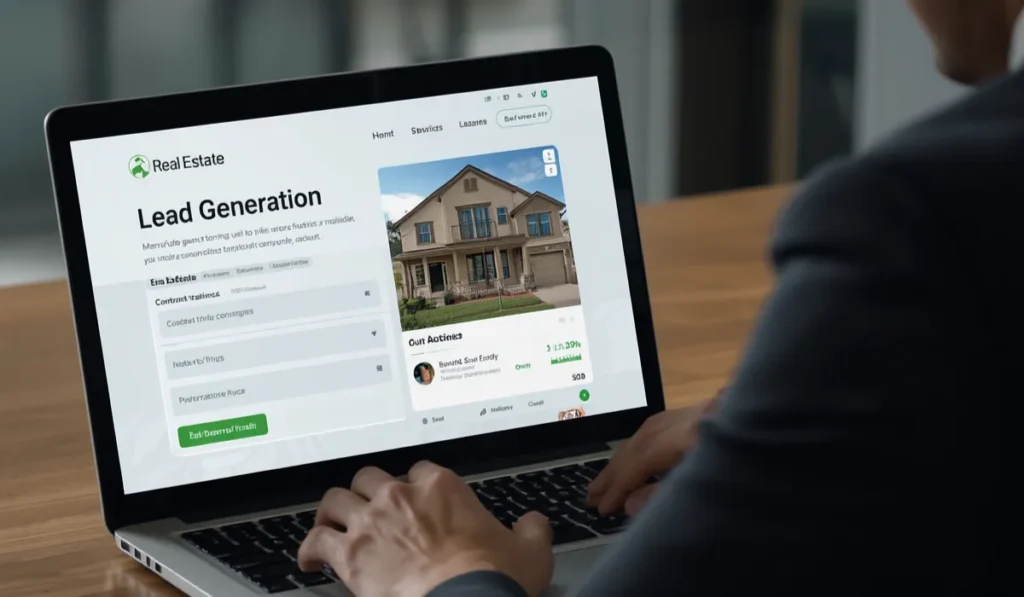
With over 62–75% of real estate website traffic coming from mobile devices, a site that isn’t built for phones is losing the majority of its potential visitors. According to NAR data, 76% of property searches start on mobile.
Mobile-first means designing for mobile screens first, then adapting the experience for desktop. This approach forces teams to define core content, primary actions, and hierarchy upfront—desktop then becomes an expansion of a well-defined experience, rather than mobile becoming a stripped-down version of a desktop-first design.
Fast Loading Speed and Core Web Vitals
Site speed is both a user experience issue and an SEO ranking factor. Google uses Core Web Vitals as a direct ranking signal in organic search. Slow websites don’t just frustrate visitors—they get ranked lower and receive less organic traffic.
SEO delivers an average ROI of 1,389% for real estate professionals, making speed optimization a critical investment. When evaluating a website platform, ask specifically about average load times and Core Web Vitals scores. You can run a free SEO audit to identify technical issues that might be slowing down your site.
The 5-Second Rule
In website design and UX optimization, you have about five seconds to win a visitor’s trust—or watch them click away. Many real estate professionals think of their website as a brochure that leads can peruse at leisure. In reality, many visitors are looking you up on their phone while sitting outside a local listing.
Your website should be a conversion tool that communicates instantly.
What visitors should see in the first five seconds:
- What you do and who you help — Use plain language with a clear, targeted message like “Helping Denver buyers find forever homes”
- Visual trust signals — Professional photography, brand consistency, social proof from affiliations and awards
- Easy navigation — Limit the navigation menu to a small number of clear choices
Visual Hierarchy and Design Consistency
A clean visual hierarchy makes even content-heavy platforms feel navigable. Headlines should be bold and logically sized so users can scan and orient themselves quickly. Secondary text should be clear and well-aligned, never competing for attention.
Properties should be arranged with plenty of margin and breathing room, making even dense listing blocks feel manageable. Visual weight should be assigned intentionally so users always know where to look next.
Restrained color palettes signal confidence and professionalism. According to color psychology research, people make subconscious judgments about a product within 90 seconds of initial viewing—up to 90% of that assessment is based on color alone. Navy, white, and subtle greys, occasionally punctuated by warm neutrals, reinforce a professional tone while making interactive elements like buttons easy to spot.
Trust Signals
According to NAR 2025 data, 43% of buyers found their agent through a friend or relative. Your website is the credibility check after the referral lands. Reviews, information about your expertise, past sales data, and professional photography all tell a visitor that you’re the real thing before they ever reach out to you.
Key trust signals to include:
- Up-to-date, high-quality professional photography
- Brand consistency across logos, fonts, and color palette
- Social proof in the form of logos for affiliations, awards, and media mentions
- Testimonials from recent clients
- Professional headshot and bio
Real Estate Website Design Trends in 2026
AI-Powered Personalization
Personalizing the website experience shows visitors that you value their individual needs. AI-powered tools can help you add personalization—for example, using geographic location and whether the visitor is new or returning to change header text.
The top real estate website design companies now embed AI-powered chatbots that provide instant assistance by answering questions, suggesting listings, and even scheduling appointments. Predictive analytics enable your site to offer personalized recommendations based on browsing patterns. This level of customization improves the user journey and boosts conversions by presenting relevant listings faster.
McKinsey reports that 71% of customers expect personalized online experiences, making this a trend that can’t be ignored. For a deeper dive into how AI is transforming digital marketing, check out this guide on SEO with AI.
Immersive Virtual Tours and Video
One of the biggest trends in real estate site design for 2026 is immersive media. Buyers now want to explore homes without stepping foot inside. High-resolution drone videos and 360° virtual tours offer a realistic experience that keeps visitors engaged longer.
The numbers support this investment:
- 40% of buyers say videos have influenced their purchasing decisions
- 73% of home sellers prefer realtors who do video marketing
- 66% of buyers value photos on websites, 33% value virtual tours
Websites with video on the homepage see up to 82% longer dwell time. These interactive features have become standard for real estate websites for realtors, as they build trust and reduce the time spent on in-person viewings.
Generative Engine Optimization (GEO)
The rise of AI search tools like ChatGPT, Perplexity, and Google Gemini has created a new frontier: Generative Engine Optimization (GEO). Google’s AI Overviews now answer a significant share of informational queries directly on the SERP, changing how users interact with results.
Success is no longer measured solely by traffic that comes to your site but by becoming the source that AI cites in its generated response. This requires structured data, clear Q&A sections, and content that provides a “unique point of view.” Learning how to automate SEO with AI can help you scale your optimization efforts efficiently.
Minimalist and Modern Visuals
Clean and modern aesthetics dominate real estate website design in 2026. Gone are the days of cluttered layouts filled with pop-ups and dense text. Today’s audience expects sleek typography, high-quality images, and whitespace that highlights property visuals beautifully.
A minimal design not only makes your real estate agent website look elegant but also improves loading speed, which is an essential ranking factor in Google.
Best Real Estate Website Design Examples
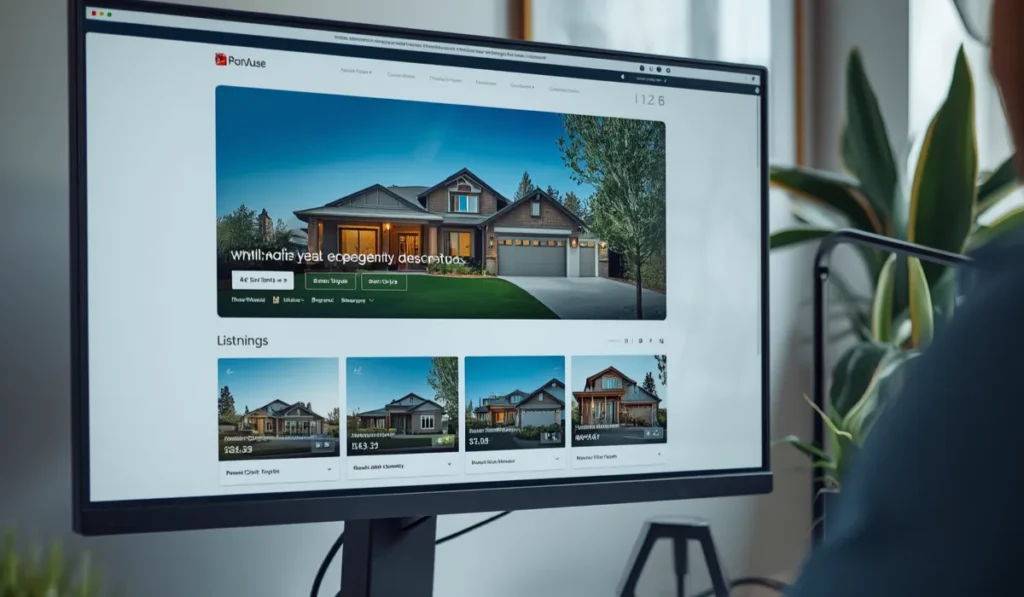
Luxury Real Estate: Southern Luxury Lifestyle
Southern Luxury Lifestyle in Greenville, South Carolina opens with a twilight Southern capitol skyline panorama and a refined green palette under “Legacy of Excellence” framing. For luxury realtors selling on history and prestige, the architectural-twilight hero is a high-ROI design choice.
Borrow this: Luxury realty homepages should hero a recognizable local landmark at twilight rather than a single listing. The landmark signals “we own this market”; a single listing signals “we have one good house this week”.
Minimalist Personal Brand: Brian Mason
Brian Mason in Arlington, Virginia executes the modern personal-brand realtor aesthetic: a minimalist monogram, a clean DMV skyline hero, and confident typography. The page reads more like a designer portfolio than a real estate site.
For a solo-agent personal brand, restraint is a flex. One monogram, one strong hero, one CTA. Maximalist agent websites read as desperate; minimalist ones read as in-demand.
High-Conversion Agency: Top Real Estate
Top Real Estate is an AI-powered database of property listings in Dubai that connects investors with properties and brokerages. Their AI matchmaking differentiates them from traditional realty sites, and their website makes that fact clear in the headline and the “How it works” section that follows.
If your client’s service is similarly unique, clarify exactly what visitors can do from the outset so everyone comes in with realistic expectations.
MLS-Integrated Platform: Olympus
The Olympus real estate website by Daymark displays a new luxury presence revamping Ōwairaka, an established community in Auckland, New Zealand. “The Homes” tab reveals detailed floor plans that clearly distinguish the various properties, while “The Development” discusses the project at large and “The Neighbourhood” talks about the perks of living in Ōwairaka.
Best Platforms and Tools for Real Estate Website Design
WordPress Real Estate Themes and Plugins
WordPress remains a powerhouse for real estate website design due to its flexibility and extensive plugin ecosystem. The Optima Express IDX plugin turns your WordPress site into a real estate marketing machine with a modern property search experience that rivals national portals.
Key benefits of Optima Express:
- No framing, wrappers, or subdomains required—all IDX listing content is indexed directly on your domain
- All IDX content adopts the styling of your WordPress theme
- Property detail pages include lead capture options like “Schedule a Showing,” “Request Info,” and “Save Property”
If you’re using WordPress, choosing the right SEO plugin for WordPress is essential for optimizing your property listings.
Webflow Templates
Webflow offers professionally designed website templates for any industry. The CMS can automatically generate schema markup for SEO purposes, and AI-powered tools like Webflow Optimize allow for personalization based on user behavior.
The Castas template for Framer (a Webflow competitor) provides a refined luxury real estate website design with calm layouts, refined typography, and confident messaging designed to position your firm as a trusted authority in the luxury real estate market.
Custom Development vs. Website Builders
Top global real estate web design agencies charge $50–$200/hour on average, with project budgets ranging from $1,500 to $250,000+. For agents with smaller budgets, builders like Leadpages ($49–$99/month), Unbounce ($99+/month), or Carrd (~$19/year) offer practical solutions without the agency price tag. You can use this project cost calculator to estimate your budget.
When deciding between platforms, consider your long-term goals. For businesses targeting the US market, web design for business in the United States requires specific attention to local expectations and SEO practices.
Image Suggestion: Add a comparison chart showing pricing and features of different platforms.
How to Design a Real Estate Website That Generates Leads
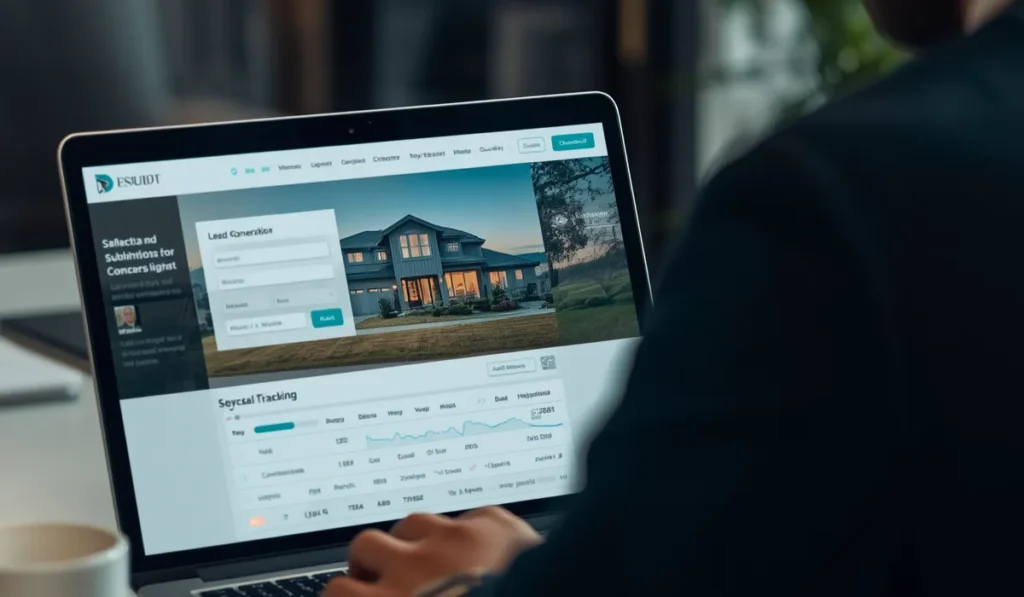
Landing Pages for Specific Campaigns
Real estate agents don’t need “a website.” They need a small set of pages that consistently do three things:
- Capture seller leads (home valuation, “thinking of selling,” neighborhood reports)
- Qualify buyers (property alerts, “get the full listing,” consultation requests)
- Promote events (open houses, broker previews, first-look tours)
Structuring Landing Pages for Conversions
A proven landing page structure:
- Make the offer obvious in five seconds — People should instantly know what happens when they fill out the form
- Use a single CTA — Real estate pages fail when they try to do everything
- Keep forms short — Start with name and email only; add qualification later
- Optimize for mobile — The first view of your page will usually happen on a phone
- Embed Calendly or similar scheduling — Booking consultations reduces drop-off
Follow-Up Speed Matters
A decent page with a fast follow-up beats a beautiful page with a slow response every time.
Choose tools that make follow-up easy—CRM, SMS, and email automations. The best real estate websites integrate seamlessly with these systems.
SEO Structure for Property Listings
57% of website visitors come from organic and paid search strategies. Optimizing your property listings for search involves:
- Detailed, unique descriptions for each listing
- Proper heading structure (H1, H2, H3)
- Schema markup for rich results
- Neighborhood-specific content that targets local searches
- Regular updates to show you’re active in the community
For agents serving specific geographic areas, understanding what is local SEO and implementing local SEO for business can make a significant difference in attracting nearby buyers and sellers.
FAQs About Real Estate Website Design
How much does a real estate website cost?
Costs vary widely based on scope and customization. Top global agencies charge $50–$200/hour with project budgets from $1,500 to $250,000+. Budget-friendly options like Leadpages start at $49–$99/month, while Carrd offers simple single-page sites for ~$19/year. For a detailed breakdown, check out this guide on how much it costs to make a professional website.
What is the best platform for real estate websites?
WordPress offers maximum flexibility with plugins like Optima Express for native IDX integration. Webflow provides modern design capabilities with automatic schema markup. For agents focused on lead capture and landing pages, Leadpages, Unbounce, and Carrd are practical choices.
How do real estate websites generate leads?
Through multiple channels: contextual lead capture forms, gated content (market reports, home valuations), saved search registrations, and clear calls-to-action on every page. The most effective sites make the offer obvious in five seconds and use a single CTA per page.
Do I need MLS integration for my website?
Yes. Without IDX/MLS integration, your real estate website is just a brochure. 85% of agents market their homes via MLS. Native IDX integration (not iframe) is especially important because it builds SEO authority for your domain over time.
Conclusion
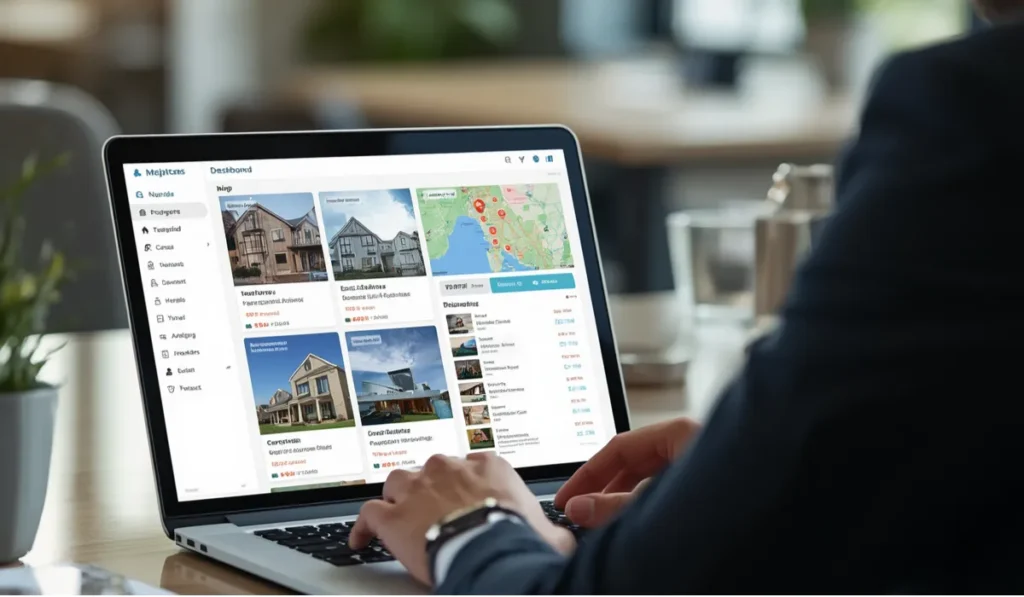
In 2026, your real estate website design is no longer just about looking good—it’s about generating leads, building trust, and serving as the central hub for your business. The most effective sites combine essential features like IDX integration, advanced search filters, and detailed listings with modern UX principles like mobile-first design, fast loading speeds, and visual hierarchy.
Key takeaways for a high-converting real estate website:
- Invest in native IDX integration — It builds SEO authority and keeps your listings current
- Design mobile-first — Over 75% of real estate traffic comes from phones
- Make the offer obvious in five seconds — What you do and who you help should be immediately clear
- Use a single CTA per page — Don’t confuse visitors with too many options
- Add immersive media — Virtual tours and video significantly increase engagement
- Build trust signals prominently — Reviews, professional photos, and local expertise indicators
The future belongs to agents who treat their website as a conversion tool, not a brochure. By implementing these real estate website design best practices, you can create a digital presence that attracts leads, builds authority, and ultimately closes more deals.
Ready to redesign your real estate website? Start by auditing your current site against these best practices using our free SEO audit tool, or explore our guides on what is SEO and how to automate SEO with AI to build a complete digital strategy.




Hi there! Do you know if they make any plugins to help with
Search Engine Optimization? I’m trying to get my blog to rank
for some targeted keywords but I’m not seeing very good results.
If you know of any please share. Thanks!
Hi! Thanks for your comment.
Yes, there are several excellent SEO plugins depending on the platform you’re using. If your blog is built with WordPress, some of the most popular options are Rank Math, Yoast SEO, and All in One SEO.
Keep in mind that plugins alone won’t improve your rankings. The biggest factors are creating high-quality content, targeting the right keywords, optimizing your titles and meta descriptions, improving your site’s speed, and building relevant backlinks.
Good luck with your SEO!
Superb blog! Do you have any tips and hints for aspiring writers?
I’m planning to start my own website soon but I’m a little lost
on everything. Would you suggest starting with a free platform
like WordPress or go for a paid option? There are so
many choices out there that I’m totally overwhelmed ..
Any suggestions? Thank you!
Thank you for your kind words! I’m glad you enjoyed the blog.
If you’re serious about building a website, I recommend starting with a self-hosted WordPress.org site rather than a free platform. It gives you full control over your content, SEO, design, and future growth. While free platforms are fine for learning, they often come with limitations that can make it harder to scale your website later.
My advice is to:
* Choose a reliable hosting provider.
* Install WordPress.
* Use a lightweight, SEO-friendly theme.
* Focus on creating valuable content consistently.
* Learn the basics of SEO from the beginning.
It may seem overwhelming at first, but once you get started, it becomes much easier. Feel free to ask if you have any specific questions, and best of luck with your new website!