Tabla de contenido
Introduction
In 2026, local search is more critical than ever. Nearly 50% of all Google searches are for local information, and almost 80% of smartphone searches for local businesses lead to an offline purchase. If your business isn’t optimized for local search, you’re missing out on customers who are actively looking for your products or services in your area.
This comprehensive guide will walk you through a complete local SEO strategy, from the fundamentals to advanced tactics. By the end, you’ll have a clear roadmap to rank in the local pack and attract more customers to your business.
What is a Local SEO Strategy?
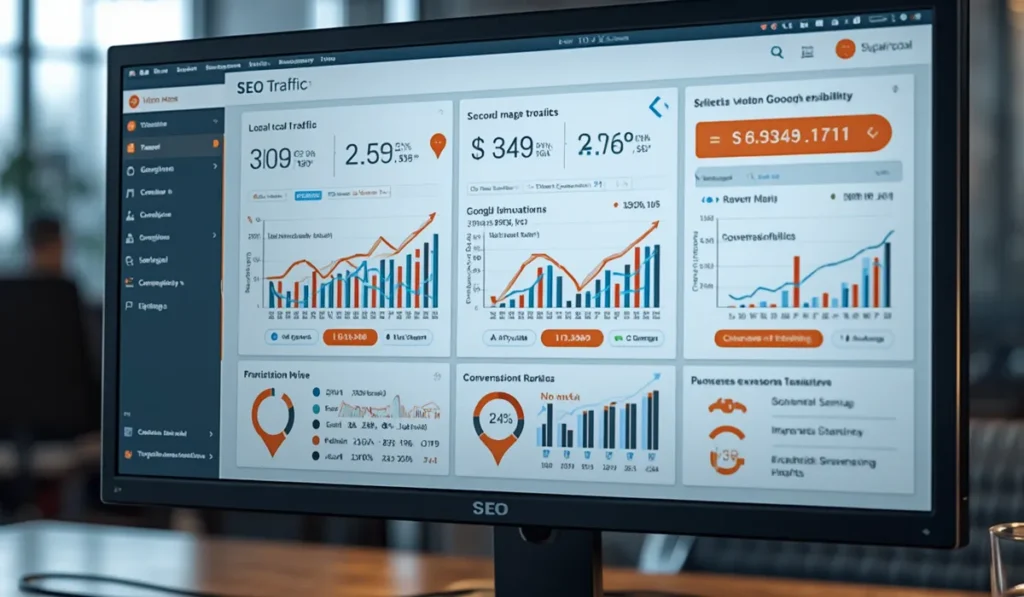
A local SEO strategy is the practice of optimizing your online presence so your business appears when people in your area search for your products or services. It’s the difference between showing up in the Google local pack (the map results at the top of local searches) and being buried on page two where nobody looks.
To build a solid foundation, you need to understand what is SEO and how it works at a fundamental level. If you’re new to search engine optimization, our complete SEO guide covers the essentials you need to know before diving into local tactics.
Local SEO vs. Traditional SEO
While traditional SEO focuses on ranking your website in organic results for broad, national, or global queries, local SEO focuses on making your business visible in location-based results: the Map Pack, local finder, Apple Maps, and increasingly AI-generated answers.
The key difference? Local SEO depends heavily on signals that live outside your website: your Google Business Profile, directory listings, reviews, and the consistency of your business information across the web.
How Local Search Results Appear
Local search results appear in three main formats:
- The Local Pack: The block of three local business results that appears at the top of Google’s search results for local queries, including a map, business names, ratings, addresses, and hours
- The Local Finder: The expanded map view showing more results
- Organic Results with Local Intent: Standard organic results that include location-specific content
For most local businesses, landing in the Map Pack is the single highest-impact goal—it captures the lion’s share of clicks for local intent searches.
Local SEO Ranking Factors You Need to Understand
Google uses three primary factors to determine which businesses appear in local results:
1. Relevance
Relevance measures how well your business listing matches what someone is searching for. Google assesses this through:
- Your Google Business Profile categories
- Your website content
- Your service descriptions
- The keywords associated with your business
A business with a fully completed profile, accurate categories, detailed service listings, and locally optimized website content consistently outranks businesses with incomplete or generic profiles.
2. Distance
Distance measures how far your business location is from the person searching. Google calculates this using your verified business address and the searcher’s location data.
While you can’t change your physical location, you can optimize for distance by ensuring your address is verified and consistent across your profile, website, and all directory listings. Service area businesses that don’t serve customers at a physical address can set service areas in their Google Business Profile to influence which searches they appear for.
3. Prominence
Prominence measures how well-known and trusted your business is both online and offline. Google assesses prominence through:
- The number and quality of reviews
- The strength of your backlink profile
- Your citation consistency across directories
- How often your business is mentioned online
- Your overall brand authority
A business with hundreds of positive reviews, strong local backlinks, and consistent citations across major directories signals high prominence to Google.
The Importance of Google Business Profile
Your Google Business Profile (GBP) is the foundation of local SEO and the single most important ranking factor for local pack results. For a complete deep dive, visit our dedicated guide on what is local SEO, which covers everything you need to know about ranking locally.
Fully populated, verified profiles generate 4x more website visits and 12% more calls.
Step 1: Optimize Your Google Business Profile (GBP)
Your Google Business Profile is the cornerstone of any local SEO strategy. Here’s how to optimize it effectively:
Claim and Verify Your Business
First, make sure you claim your Google Business Profile. You can do this directly from Google Search by:
- Searching for your business on Google
- Clicking on the result and clicking “Own this business?”
- Following the prompts to claim the page
If your business isn’t already listed, you can add it at business.google.com. Your GBP serves as your local storefront on Google Maps & Search.
Select the Right Categories
Your primary category is one of the strongest ranking signals in your profile. Choose the most specific and accurate category available—instead of “Restaurant,” choose “Italian Restaurant” or “Pizza Restaurant.”
You can also add secondary categories. If your business truly fits in several categories, make the primary category the part of your business that you believe will make up the highest percentage of your revenue.
Industry-Specific Guidance: Google released 2026 playbooks for different industries, recognizing that customer behavior, search intent, and conversion paths vary significantly by vertical. Restaurants should focus on menu accuracy and visual storytelling, while service-based businesses should emphasize service area optimization and reputation management.
Write a Compelling Business Description
Your business description should be concise and informative—four sentences or less. Include a couple of keywords pertaining to your business, but avoid “keyword stuffing.”
Consider including who you are, what you offer, and what sets you apart from your competitors. Google recently released an AI-powered suggestion option that can help you brainstorm.
Add Photos Regularly
Photos are crucial for engagement. Businesses with 100+ photos get 520% more calls than those with fewer than 10. Google recommends including:
- At least one exterior photo
- Two interior photos
- One team photo
- Two or more product or service photos
- A photo of your menu (if applicable)
Upload new photos weekly to signal an active, maintained profile.
Enable All Features
Enable messaging, appointments, and every applicable feature to maximize your profile completeness. Post updates at least weekly—Google rewards active profiles with higher visibility.
Publish Google Posts
Regular Google Posts signal an active, maintained profile and give Google fresh content to associate with your business. These can include special offers, events, or news about your business.
Step 2: Local Keyword Research Strategy
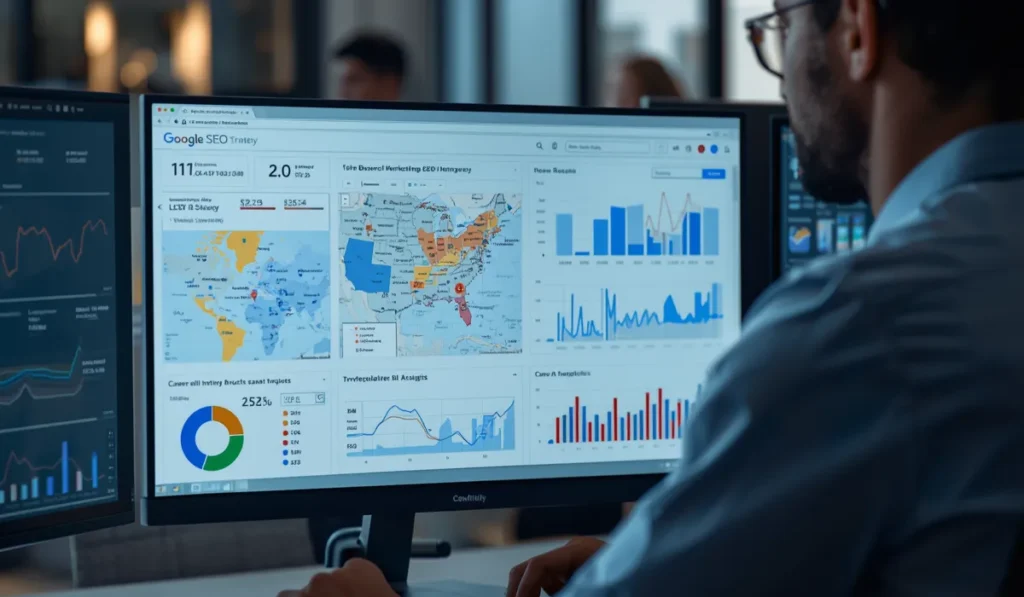
Keyword research is essential for any local SEO strategy. Here’s how to find the right keywords:
Types of Local Keywords
Location-Specific Keywords: Combine your service or product with your city or region:
- “Best plumber Dallas”
- “Dallas plumbing”
- “Plumbing company Dallas”
“Near Me” Keywords: Optimize for “near me” searches, which are increasingly common:
- “Plumber near me”
- “Coffee shop near me”
Long-Tail Keywords: Longer, more specific phrases that customers use:
- “How to fix a clogged drain”
- “What to do if my toilet is leaking”
How to Research Local Keywords
Start by brainstorming relevant keywords, then use keyword research tools like Semrush or Google Keyword Planner to gather data and identify high-value terms. Consider searching for your competitors and analyzing the keywords they’re targeting.
Map Keywords to Specific Pages
Once you have your keyword list, assign each keyword to a specific page on your website:
- Homepage: Primary keywords for your main service
- Service Pages: Specific service keywords
- Location Pages: Service + city combinations
Step 3: On-Page SEO for Local Rankings
Your website provides the supporting signals that reinforce what your Google Business Profile says about your business. Here’s how to optimize it:
Optimize Title Tags and Meta Descriptions
Title Tags: Should be between 51-60 characters and include your target keyword and location.
- Example: “Plumbing Services in Dallas | ABC Plumbing”
Meta Descriptions: Should be between 120-160 characters, include your target keyword, and describe the content of the page.
Create Location Pages
If you serve multiple areas or have multiple locations, create a dedicated page for each one. Include:
- The location name and address
- A unique description (not copied from other location pages)
- Local testimonials
- An embedded Google Map
- Location-specific information and keywords
Avoid “cookie-cutter” pages that only swap out city names—Google recognizes and devalues thin, duplicate location pages.
Implement Schema Markup
LocalBusiness schema is code that helps search engines understand your business information. It tells Google (and AI engines) your business name, address, hours, services, and more in a structured format. This can help you show up in rich results and improve your local visibility.
Optimize Your URL Structure
Use clear, descriptive URLs for your location pages:
example.com/areas-served/dallas/example.com/services/plumbing/
Ensure NAP Consistency on Your Website
Your business name, address, and phone number must appear on your website and match exactly what’s in your Google Business Profile. NAP consistency is critical for local search visibility. Even small variations, such as abbreviations or formatting differences, can reduce trust signals and weaken local performance. Display your NAP in the footer of every page and on your contact page.
Add Local Content
Create blog posts and content that’s relevant to your local area—neighborhood guides, local event recaps, community partnerships, and area-specific advice. This builds topical authority around your location and signals to search engines that your business is genuinely connected to the area.
Mobile-Friendly Website
Most local searches occur on mobile devices. Google indexes the mobile version of your website over your desktop version, so a responsive design is essential. Ensure your site loads quickly—page speed is an important ranking factor and searchers will leave if it doesn’t load fast enough.
For businesses in the US market, web design for business in the United States covers the technical and design standards expected by American consumers.
Step 4: Build Local Citations and NAP Consistency
What Are Local Citations?
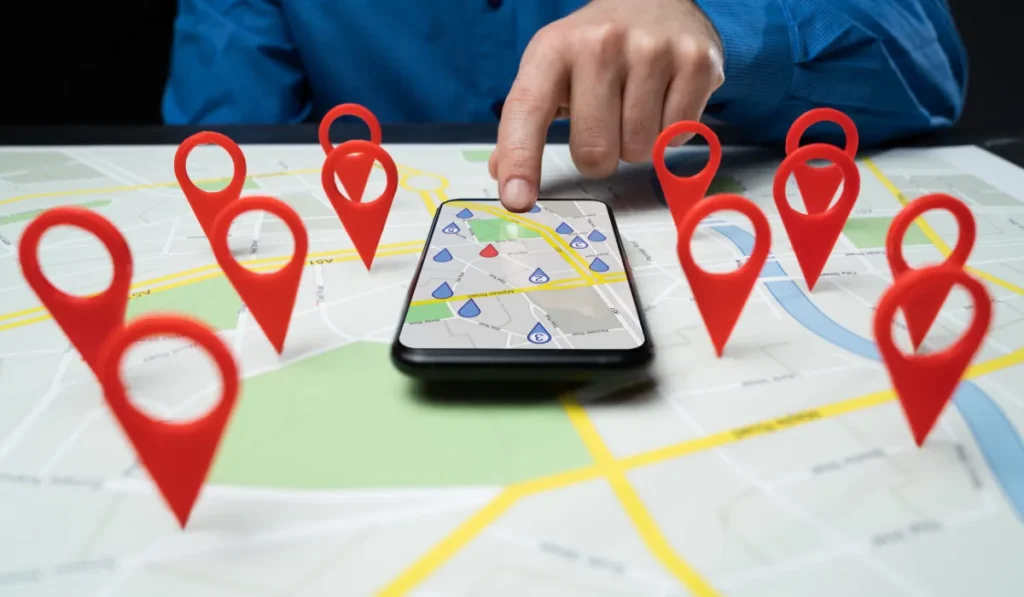
Local citations are online mentions of your business’s name, address, and phone number (NAP). They appear on directories (Yelp, Yellow Pages, BBB), social platforms, industry sites, and local chambers of commerce.
Citations act as digital trust signals. When they’re consistent and accurate across multiple platforms, search engines see your business as more reliable, which can improve your visibility in local search results.
Why Citations Matter
Citations help search engines verify your business is real and improve your visibility in local search results. They also support E-E-A-T (experience, expertise, authority, trust)—key signals Google looks for when ranking local results.
AI Tools and Citations: AI tools like ChatGPT, Perplexity, and Google’s own AI Overviews increasingly rely on structured business data from trusted citation sources. This makes citation consistency even more important for 2026.
Key Citation Sources
Core Platforms:
- Google Business Profile (the most important citation source)
- Yelp
- Bing Places for Business
- Facebook Business Pages
- Apple Business Connect
Industry-Specific Platforms:
- OpenTable (restaurants)
- Avvo (legal)
- Zocdoc (medical)
- TripAdvisor (travel)
- Angi (home services)
Local Directories:
- Local chambers of commerce
- City and state business directories
- Neighborhood networks like Nextdoor
NAP Consistency: The Critical Factor
NAP consistency means keeping your name, address, and phone number exactly the same across every platform—down to whether you spell out “Street” or abbreviate to “St.”
Even small mismatches can confuse search engines and hurt your rankings. Inconsistent NAP is a signal to Google that your business may not be reliable and trustworthy.
How Many Citations Do You Need?
A good starting point is 30 to 50 accurate, high-quality citations to build a strong foundation. In a competitive market, you may need more. Focus on quality over quantity—a citation from a high-authority source carries significantly more weight than one from a low-quality directory.
How to Build Citations
You can build citations manually or through tools:
Manual Citation Building:
- Start by auditing your current listings
- Claim and complete your profiles on the most important platforms
- Fill in everything you can: business description, categories, hours, photos, and services
Citation Building Tools:
- BrightLocal: All-in-one platform for citation building, auditing, and cleanup. Submits to 100+ directories and tracks citation status over time. Pricing starts at $29/month.
- Whitespark: Local Citation Finder helps discover where your competitors are listed and where your business is missing. Offers both DIY tools and managed services.
- Semrush Listing Management: Distributes and manages business info across key directories from one dashboard. Flags duplicate listings and inconsistent NAP data.
Step 5: Reviews and Reputation Management
Reviews are among the most powerful local ranking signals. They influence both where you rank and whether searchers choose you over competitors.
Why Reviews Matter
- Nearly 90% of people read reviews for local businesses
- Reviews are a primary ranking and conversion factor
- Google will only source top-rated businesses for searches containing “best”
- Review quantity, recency, and average rating all influence how prominently your profile appears
How to Get More Reviews
- Ask happy customers to leave you feedback
- Include a link to your Google Business Profile on your website
- Include a link in customer emails
- Send email surveys
- Ask in person after a successful transaction
Review Velocity Matters
The total number of reviews is important, but velocity matters as much as total count. A business that receives consistent new reviews every week signals ongoing customer activity and business health to Google.
Encourage reviews as part of your standard customer interaction process rather than running occasional review drives.
How to Respond to Reviews
Google lists responding to reviews as a way to improve your local ranking. Businesses that respond to every review, positive or negative, demonstrate engagement—a positive engagement signal for Google.
For positive reviews: Thank the customer and personalize your response.
For negative reviews: Stay professional and friendly:
- Check your records and reply honestly about what happened
- Apologize if needed
- Offer to resolve the issue offline
- Sign your name to show it’s not an automatic response
A well-handled negative review often builds more trust than an unresponded positive one.
Aim for 10+ Reviews
Aim for 10 or more reviews for most businesses. Ten means a bad review doesn’t immediately tank your score, and it shows that many people have bought a service or product from you and had a good experience.
Step 6: Local Link Building Strategy
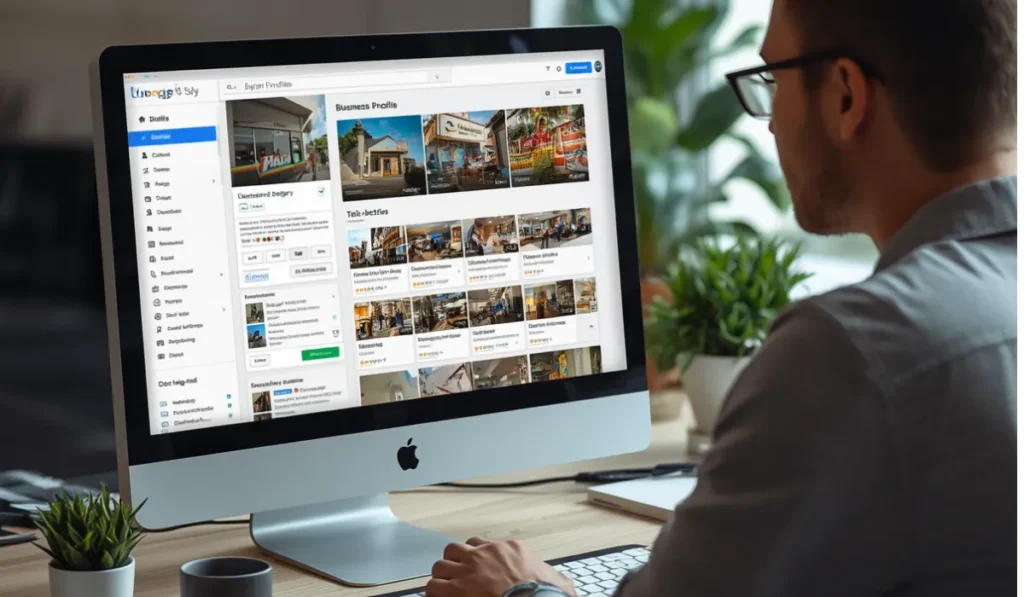
Backlinks remain a significant ranking signal in local SEO, particularly for competitive markets.
Why Local Links Matter
Links from locally relevant sources carry more weight than generic links from unrelated sites. A link from your city’s newspaper, chamber of commerce, or community organization signals genuine local authority that a link from a generic directory cannot replicate.
Local Link Building Strategies
- Sponsor local events, teams, and charities—these typically include a link on the organization’s website
- Get listed on your local chamber of commerce and business association directories
- Contribute expert quotes or articles to local news publications
- Partner with complementary local businesses for cross-promotion and reciprocal links
- Create locally relevant content—community guides, local event roundups, and area-specific resources that earn natural links
- Claim and optimize profiles on all relevant industry directories for your niche
Links vs. Citations
Citations and links are different signals. Citations are mentions of your NAP (often unlinked), while links are clickable connections. Both are valuable, but links carry more authority. A strong local SEO strategy includes both.
Step 7: Local Content Strategy
Content is essential for demonstrating expertise and building local authority.
Types of Local Content
Blog Posts: Create content about local events, industry trends, and area-specific advice. A blog gives your business a place to showcase your expertise and authority while keeping your website consistently updated with fresh, keyword-rich content.
Location Pages: Dedicated pages for each service area with unique content.
FAQ Pages: Provide answers to commonly searched long-tail local keywords. An FAQ page can give search engines and searchers valuable information that can help you rank or win business.
Community Guides: Create guides to your local area that highlight attractions, events, and businesses—positioning your business as a local authority.
Content for E-E-A-T
Creating regular content helps demonstrate E-E-A-T (Experience, Expertise, Authority, Trustworthiness):
- Experience: Write about topics you have first-hand knowledge of
- Expertise: Show depth of knowledge on your subject matter
- Authority: Be recognized as a reference source in your niche
- Trust: Provide accurate, reliable information
Content Freshness
Google tends to rank recent content higher, so update your website frequently. Content cited by AI engines is on average 25% newer than the top 10 Google results for the same queries.
AI-Powered Content Creation
If you’re looking to scale your content production, you can learn how to automate SEO with AI using tools like Make.com, Frase.io, and ChatGPT. This step-by-step guide covers everything from keyword clustering to automated content brief generation.
For a broader understanding of SEO with AI, our comprehensive guide explains how artificial intelligence is transforming search engine optimization in 2026.
Step 8: Technical SEO for Local Websites
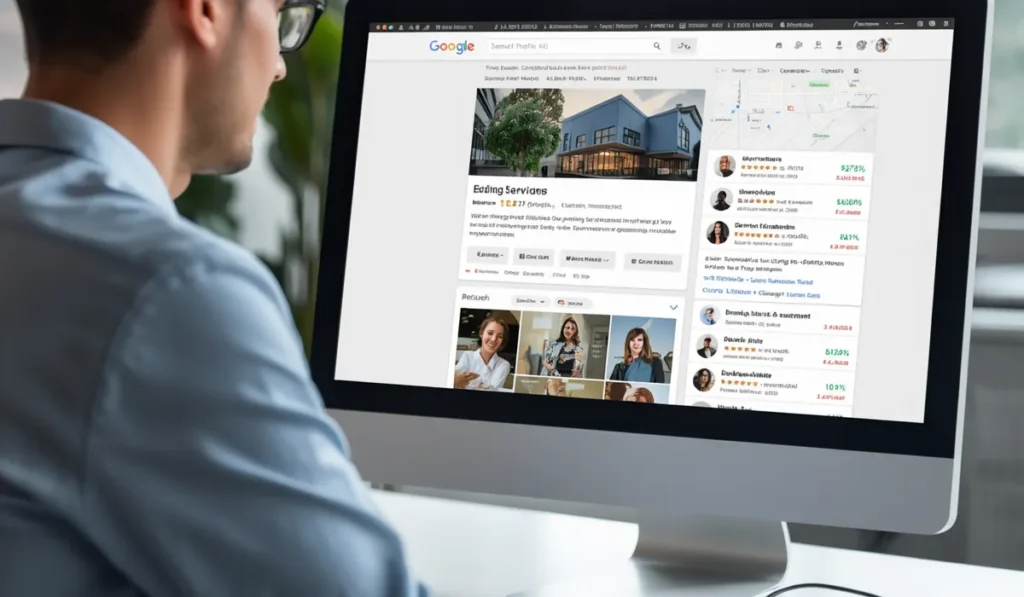
Technical site health doesn’t directly control local pack rankings, but it significantly affects local organic rankings and the overall user experience signals that support your local authority.
Mobile-Friendly Design
Most local searches occur on mobile devices. Google indexes the mobile version of your website over your desktop version. A responsive design with intuitive navigation (hamburger menu) and appropriately sized buttons is essential.
Page Speed
Page speed is an important ranking factor—plus, searchers will leave a website if it doesn’t load quickly. Optimize images, use lazy loading, and enable compression to improve Core Web Vitals.
Schema Markup
Implement LocalBusiness schema markup to help Google understand your business information. This includes:
- Name, address, phone number
- Hours of operation
- Services and products
- Reviews
- Coordinates
Internal Linking
Internal links help Google and searchers find information on your site. Link relevant pages of your site together, especially from high-authority pages to your location pages.
Site Structure
Ensure you have an easy-to-navigate site with a clear path for users to take from the moment they land on your site until they become a lead. Submit your sitemap to Google to help with indexing.
Technical Audits
Regular technical audits are essential for maintaining site health. You can run a free SEO audit to identify issues like broken links, missing meta descriptions, duplicate title tags, and pages not indexed.
For WordPress users, choosing the best SEO plugin for WordPress is critical—Rank Math, Yoast, and SEOPress each offer different strengths for managing your technical SEO foundation.
Step 9: Tracking and Measuring Local SEO Performance
Core Metrics to Track
- Local pack position for target keywords
- GBP impressions and actions (calls, direction requests, website clicks)
- Organic traffic from local pages
- Citation accuracy score
- Review velocity and average rating
- Conversion rate from local search visitors
Tools for Tracking
- Google Search Console: Free ranking and indexing data
- Google Business Profile Insights: Metrics from your profile
- BrightLocal: Local rank tracking and competitive analysis
- Whitespark: Citation tracking and audits
- Local Falcon: Geo-grid tracking for Google Maps that shows rankings across a city or service area
- Semrush: Complete SEO suite with local features
AI-Powered Tracking
Tools like Local Falcon have developed AI specifically designed for local SEO, offering analysis and recommendations to improve rank in search. These AI-powered insights help you understand results and create strategies to improve overall visibility.
Calculate Your ROI
Calculate your local SEO ROI quarterly to justify continued investment. Track calls, direction requests, and website conversions from local search, and attribute revenue to these sources.
Managing Expectations
It’s important to have realistic expectations about timelines. Our guide on how long does it take to see results with SEO explains the typical SEO lifecycle: months 1-3 focus on audits and foundations, months 4-6 show first results, and months 7-12+ build authority.
Common Mistakes in Local SEO Strategy
- Inconsistent NAP information across platforms—even small mismatches confuse search engines
- Not optimizing Google Business Profile completely—every field is a ranking signal
- Lack of local content—thin, duplicate location pages that don’t provide unique value
- Ignoring reviews—not responding to reviews or not having a review generation process
- Keyword stuffing—overloading your business name or content with keywords
- Not enough citations—especially in competitive markets
- Leaving listings neglected or unclaimed
- Buying low-quality links—can result in penalties
Final Local SEO Strategy Checklist
Before Launching Your Local SEO Strategy
- [ ] Google Business Profile claimed and verified
- [ ] GBP completely optimized: all fields filled, photos added, categories selected
- [ ] NAP consistent across your website and all citations
- [ ] Dedicated location pages created for each service area with unique content
- [ ] LocalBusiness schema markup implemented
- [ ] Title tags and meta descriptions optimized for local keywords
- [ ] Mobile-friendly, fast-loading website
- [ ] Review generation process established
- [ ] Citations built on 30-50+ directories using tools like BrightLocal’s Citation Builder
- [ ] Local link building strategy in place
Monthly Optimization Checklist
- [ ] Post updates to GBP at least weekly
- [ ] Respond to all reviews within 24 hours
- [ ] Monitor local pack positions
- [ ] Track GBP insights (impressions, calls, direction requests)
- [ ] Publish new local content
- [ ] Monitor citation accuracy
- [ ] Check review velocity and sentiment
Scaling Local SEO for Multiple Locations
- [ ] Create a separate GBP for each location (with unique phone numbers)
- [ ] Create a dedicated location page for each location on your website
- [ ] Use unique content for each location page
- [ ] Build citations for each location
- [ ] Monitor rankings for each location
- [ ] Use a listing management tool to maintain consistency at scale
The Future of Local SEO: AI and Generative Search
In 2026, local search increasingly includes AI-powered results. Google AI Overviews, ChatGPT, and Perplexity all provide local business recommendations.
How AI Search Finds Your Business
Many of the same signals that drive local search performance—accurate listings, strong reviews, consistent NAP data, rich content—are what AI models use to decide which businesses to recommend.
AI models pull from a wide range of sources: your Google Business Profile, your website, review platforms, directory listings, and social media. They evaluate the consistency, recency, and authority of your data.
New Metrics for an AI-Driven World
- Share of voice: How often your business is mentioned relative to competitors in AI responses
- Mention rate: How frequently your business appears in AI-generated answers
- Citation rate: How often AI engines link back to your website or listing
- Sentiment score: The tone with which AI describes your business, based on review and content analysis
Businesses that excel at local SEO are well-positioned for AI search optimization as well. By following the strategies in this guide, you’re not just optimizing for today’s search results—you’re preparing for the future of local search.
Industry Context Matters
According to Yext research, local SEO performance is heavily influenced by regional and industry differences. The signals that drive visibility differ by vertical and by geography. The same SEO move that boosts a bank’s ranking in Austin might prove less effective in Yonkers.
Industry-specific ranking factors:
- Healthcare: Favors review volume and frequency
- Retail: Google favors keyword matches, review count, and review frequency
- Hospitality: The algorithm favors photo quality and consistency of business hours
- Restaurants: Google favors review rating and frequency of owner responses
A strong local SEO strategy means optimizing for the search engine ranking factors that matter most to your industry and region.
Emerging Business Opportunities
As local SEO evolves, new opportunities emerge. If you’re interested in expanding your skill set, explore ChatGPT business ideas for leveraging AI in your local SEO services. You might also consider the 25 best freelance skills to learn in 2026, with SEO ranking among the highest-paying options.
For those wanting to build a business with AI automation, many of the workflows discussed in this guide can be systematized and scaled, creating recurring revenue opportunities.
Conclusion
A strong local SEO strategy is essential for any business that wants to attract customers in their area. By following this step-by-step guide and consistently implementing each component, you can improve your visibility in local search results, drive more foot traffic and calls, and grow your business.
Start with the fundamentals: claim and optimize your Google Business Profile, ensure NAP consistency across all citations, get more reviews, and create location-specific content. Then build on that foundation with local link building, technical optimization, and tracking to refine your strategy.
The businesses that invest in local SEO today will be the ones that customers find tomorrow. With the right tools—from BrightLocal for citation management to Local Falcon for geo-grid tracking—you can build a local SEO strategy that delivers results in 2026 and beyond.
If you’re ready to take the next step, consider working with experienced SEO agencies that understand the nuances of local search. For businesses targeting the US market, our guide on SEO for business in the United States provides additional region-specific strategies.
Use our free SEO calculator to estimate your potential ROI, and audit your site to identify technical issues that may be holding back your local rankings.




Useful information. Lucky me I found your site by accident,
and I’m surprised why this accident did not took place in advance!
I bookmarked it.
Terrific post however I was wondering if you could write a litte more on this topic?
I’d be very grateful if you could elaborate a little bit more.
Kudos!