
Tabla de contenido
Introduction
The entrepreneurial landscape has fundamentally shifted. In 2026, artificial intelligence is no longer a futuristic concept or a nice-to-have luxury—it is the operating system of modern business. According to a comprehensive LegalZoom survey of 1,000 entrepreneurs, 77% now use AI tools at least weekly, with 42% using them daily [1]. This represents a tectonic shift in how founders build and scale their ventures.
The numbers tell a compelling story. A 2025 QuickBooks survey found that 74% of small businesses using AI reported improved productivity [1]. Beyond efficiency, entrepreneurs are experiencing tangible financial benefits: 18% say AI has significantly reduced their costs, while 34% report somewhat reduced costs [1]. Perhaps most tellingly, 67% of respondents say AI has increased their confidence in making business decisions [1].
But here is the critical insight that separates successful founders from those who struggle: the best AI tools for entrepreneurs are not used in isolation. The winners in 2026 are building complete “AI stacks”—connected systems where tools work together to automate, optimize, and scale operations. As Mercury, a fintech platform for startups, explains, an AI-native stack involves “AI agents and automations with human supervision,” rather than humans operating static SaaS tools [2].
This guide will walk you through the complete AI stack for business growth—from understanding why AI is essential, to selecting the right tools for your stage, to building a connected system that actually moves the needle. If you’re new to the fundamentals of online visibility, understanding what is SEO provides essential context for how AI tools can amplify your digital presence.
Why AI Tools Are Essential for Modern Entrepreneurs

The Productivity Multiplier Effect
Entrepreneurs wear every hat—CEO, marketer, accountant, customer support agent, and more. AI tools for entrepreneurs compress time and multiply output. What once required a full-time hire can now be handled by an AI agent in minutes.
Anthropic’s “Claude for Small Business” suite exemplifies this shift. By connecting Claude directly to QuickBooks, PayPal, HubSpot, and Canva, founders can run entire workflows from one interface. As Forbes reports, “The campaign that used to take at least a day takes 45 minutes” [3].
For entrepreneurs looking to understand the full spectrum of opportunities, exploring online business ideas reveals how AI is creating entirely new categories of ventures that were impossible just a few years ago.
The Rise of the “Digital Employee”
The venture capital firm PitchBook describes the current era as the transition to “work as a service,” where “legacy seat-based software models are being replaced by guaranteed workflow outcomes” [2]. Human capital evolves “from raw technical execution to the high-leverage orchestration of autonomous digital agent fleets” [2].
For the solopreneur or lean startup, this is transformative. A founder can now achieve the output of a team three times larger. The 25 best freelance skills for 2026 reflect this shift, with AI-related capabilities like prompt engineering commanding $75–$250 per hour [4].
Data-Driven Decision Making
Entrepreneurs are using AI not just for execution but for strategy. According to the LegalZoom survey, 38% use AI for planning or researching a business idea, 37% for marketing or customer acquisition, and 34% for scaling or growing the business [1]. The ability to quickly analyze market data, competitor positioning, and customer sentiment gives AI-equipped founders a decisive edge.
However, successful entrepreneurs recognize AI’s limits. The same survey found that 38% would not rely on AI for high-risk legal or financial decisions, 36% for decisions affecting customers, and 34% for decisions involving regulatory penalties [1]. As LegalZoom CEO Jeff Stibel noted, “When the stakes are high, you still need human judgment, guidance and expertise” [1].
The Core AI Tool Categories Every Entrepreneur Needs

Before diving into specific tools, it’s essential to understand the categories that form a complete AI stack. Think of these as the departments in your AI-powered organization.
1. Content Creation & Copywriting Tools
Every business needs content—blogs, emails, social posts, ad copy, and more. AI writing tools generate first drafts, suggest headlines, and help maintain brand consistency at scale.
Key tools: ChatGPT, Claude, Jasper, Copy.ai
Use cases: Blogs, marketing emails, social media content, business plan drafting, ad copy
To understand how these tools integrate with broader marketing strategy, exploring SEO with AI provides a comprehensive framework for combining content creation with search visibility.
2. Productivity & Knowledge Management Tools
These tools organize your business operations, documentation, and team workflows. They serve as the central nervous system of your AI stack.
Key tools: Notion AI, ClickUp AI, Saner.AI
Use cases: Project management, SOP documentation, team collaboration, internal knowledge retrieval
3. Automation & Workflow Tools
Automation tools connect your applications and eliminate repetitive manual tasks. They are the “connective tissue” of your tech stack.
Use cases: Lead routing, data synchronization, multi-step business processes, integration between disparate apps
For entrepreneurs building an AI automation business, these workflow tools become the foundation of service delivery, enabling you to build systems that run without constant human intervention.
4. Marketing & Sales Tools
These platforms help you acquire customers, manage relationships, and drive revenue. They integrate AI into CRM, email marketing, and sales workflows.
Key tools: HubSpot AI, Mailchimp, Salesforce Einstein
Use cases: Lead scoring, automated follow-ups, customer segmentation, campaign optimization
5. Research & Decision-Making Tools
AI-powered research tools help founders validate ideas, analyze competitors, and make informed strategic decisions.
Key tools: Perplexity AI, ChatGPT (Deep Research)
Use cases: Market research, competitor analysis, trend identification, customer insight discovery
6. Design & Visual Content Tools
Visual content is non-negotiable for modern brands. AI design tools democratize professional-quality visuals.
Key tools: Canva AI, GemPages
Use cases: Social media graphics, marketing materials, landing page design, product visuals
Best AI Tools for Entrepreneurs (Full Ranked List)
ChatGPT: The All-in-One Business Assistant
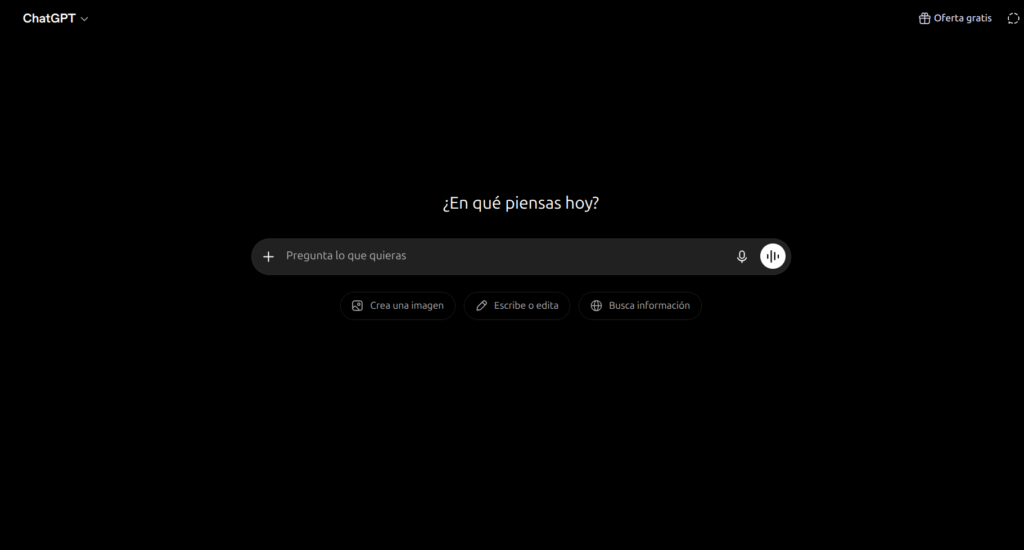
ChatGPT remains the most widely used AI tool among entrepreneurs, with 73% reporting regular usage [1]. Its versatility makes it the foundation of most AI stacks.
Key capabilities:
- Content creation and editing
- Business brainstorming and ideation
- Strategy development
- Simple task automation
- Deep Research (agentic web research) [10]
Best for: Solopreneurs and small teams needing a general-purpose AI assistant
Pricing: Free tier available; Plus at $20/month; Pro at $200/month [10]
For practical applications, the guide on ChatGPT business ideas showcases over 25 proven ways entrepreneurs are monetizing this tool, from content services to automation agencies.
Claude: Strategic Thinking & Long-Form Analysis
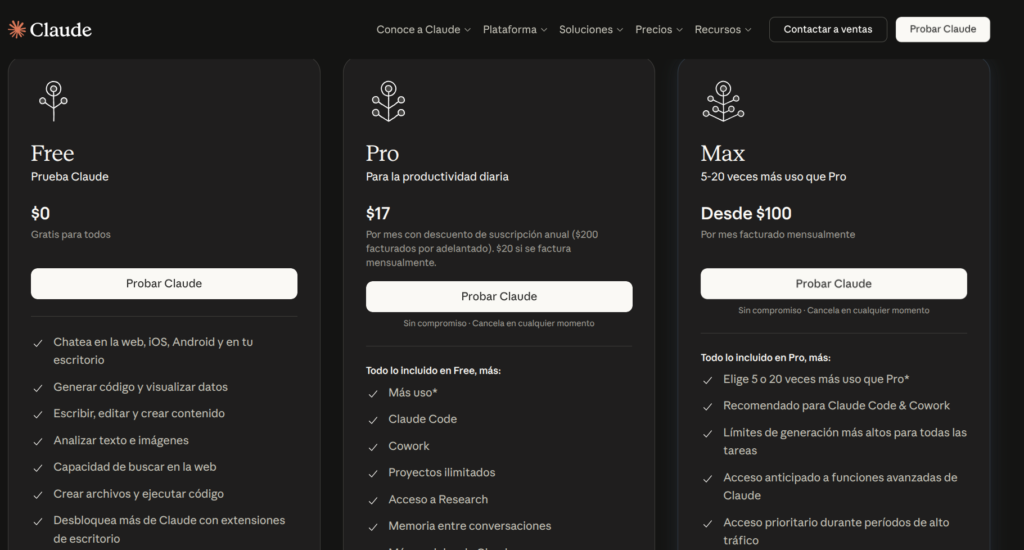
Anthropic’s Claude has emerged as the tool of choice for entrepreneurs needing sophisticated reasoning. Its 1-million-token context window allows processing of entire business books, legal contracts, or codebases in one go [3]. The new “Claude for Small Business” suite connects directly to QuickBooks, PayPal, HubSpot, and Canva [3].
Key capabilities:
- Complex financial analysis
- Code generation and system design
- Strategic planning
- Long-form document processing
- Claude Cowork and Claude Design features [2]
Best for: Technical founders, content agencies, and entrepreneurs needing nuanced analysis
Pricing: Free tier; Pro at $17/month; Max from $100/month; Team from $20/seat/month [2]
Perplexity AI: The Research Engine
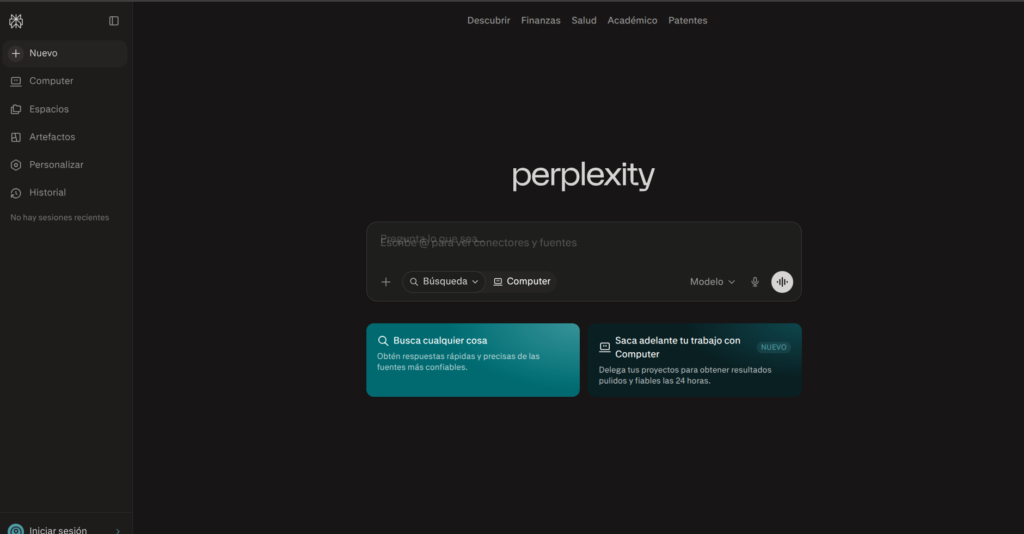
Perplexity AI has carved out a niche as the go-to tool for research with citations. Unlike traditional search, it synthesizes answers from multiple sources with clear attribution [3].
Key capabilities:
- Market and competitor research
- Trend analysis
- Idea validation
- Source-cited answers
Best for: Founders in research-intensive stages of business building
Notion AI: The Business Operating System
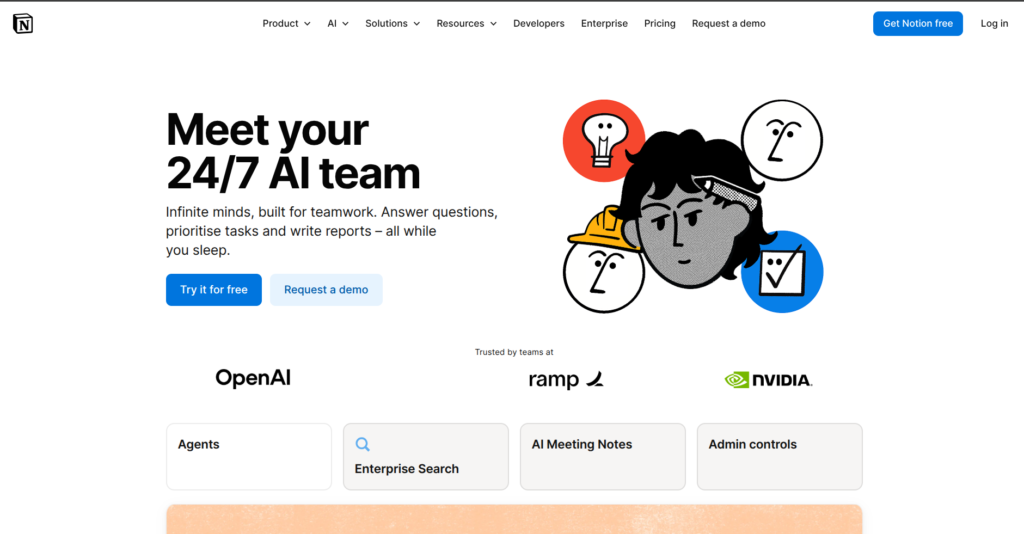
Notion AI transforms your workspace into an intelligent knowledge base. It can answer questions based on your stored documents, draft content, and summarize project status [4].
Key capabilities:
- Project management
- Internal documentation
- Process organization
- AI-powered knowledge retrieval
- Custom Agents for workflow automation
- AI Meeting Notes and Enterprise Search [4]
Best for: Teams needing central workspace and knowledge management
Pricing: Free tier; Business from $10/month; Enterprise (custom pricing) [4]
Zapier: The Automation Powerhouse
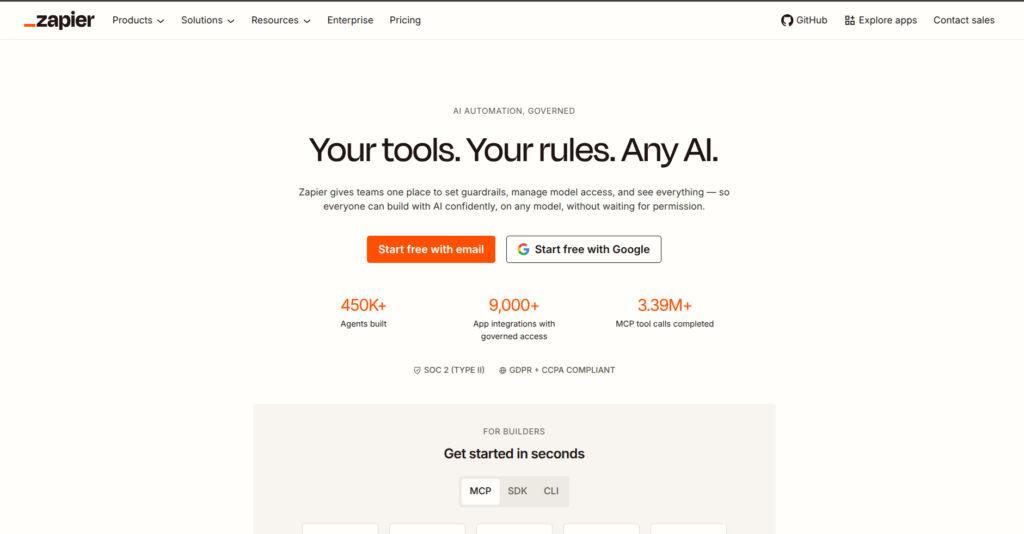
Zapier connects thousands of applications without coding, making it essential for entrepreneurs who want to eliminate manual data movement [5].
Key capabilities:
- Cross-application automation
- Natural-language workflow building
- Multi-step task execution
Best for: Any entrepreneur using multiple tools that need to work together
Pricing: Free tier; Professional at $29.99/month
Make.com: Advanced Automation Alternative
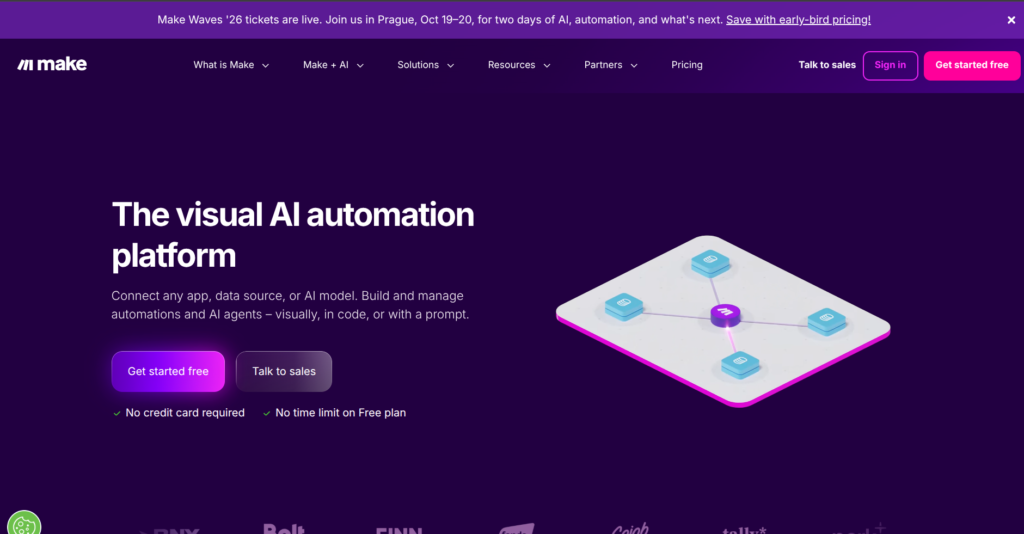
Make.com offers more visual, flexible workflow automation than Zapier, especially for complex, multi-step processes [6].
Key capabilities:
- Complex workflow orchestration
- Advanced integrations
- Visual flow building
- AI Agents and agentic automation
- Support for over 3,000 pre-built apps [6]
Best for: Entrepreneurs with complex automation needs
Jasper AI: Marketing Content Creation
Jasper specializes in on-brand marketing content at scale. It maintains consistent tone and voice across different content types. Jasper is trusted by hundreds of enterprises worldwide, including nearly 20% of the Fortune 500, and reports 4x average ROI for customers [7].
Key capabilities:
- Ad copy generation
- SEO content creation
- Marketing email drafting
Best for: Marketing-focused founders and content-heavy businesses
Copy.ai: Fast Content Generation
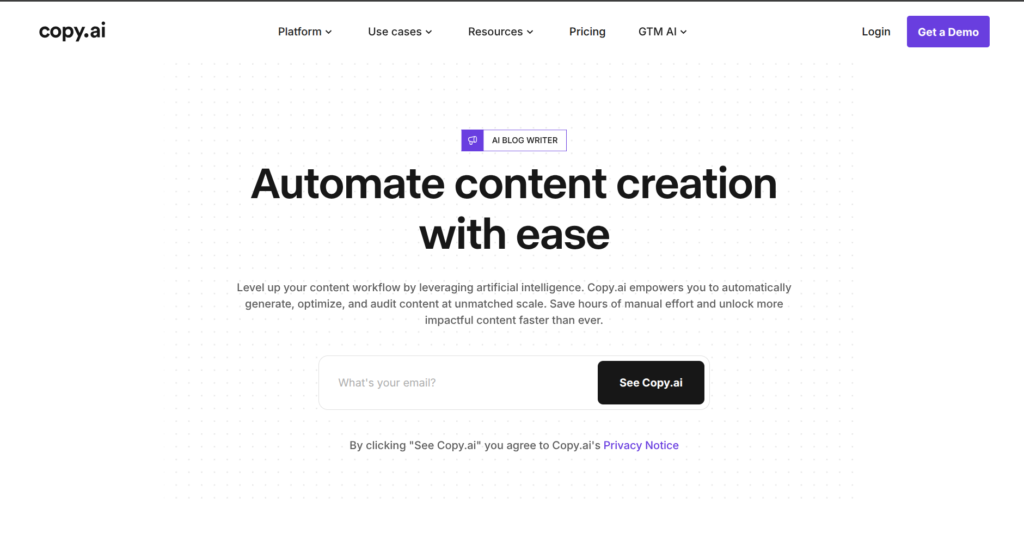
Copy.ai excels at quick, short-form content generation, making it ideal for entrepreneurs who need speed over depth [8].
Key capabilities:
- Social media content
- Email drafts
- Ad variations
- Automated content workflows
- SEO content generation and optimization [8]
Best for: High-volume content needs
HubSpot AI: CRM & Sales Automation
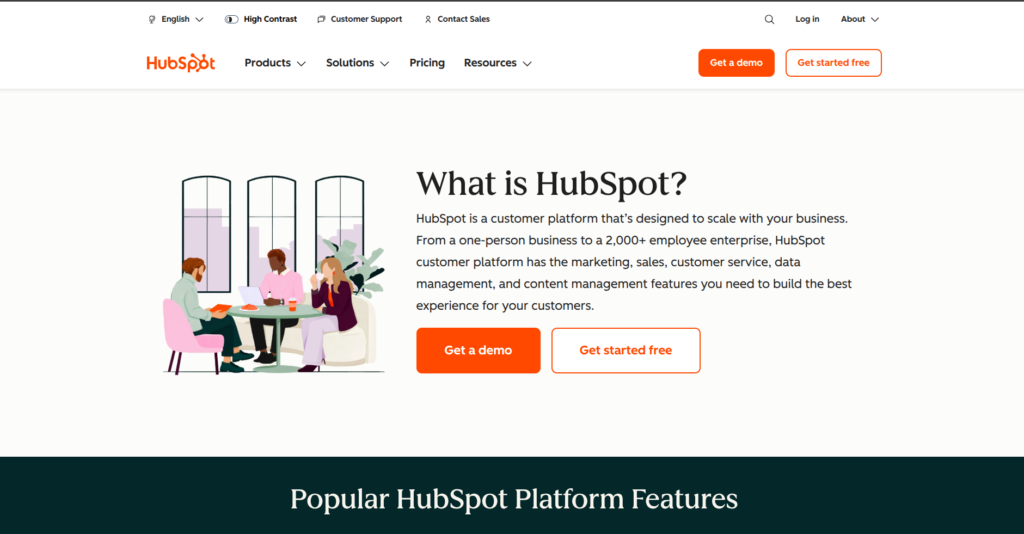
HubSpot AI integrates artificial intelligence directly into CRM and marketing workflows, helping entrepreneurs manage customer relationships efficiently [9].
Key capabilities:
- Lead scoring
- Automated follow-ups
- Content generation
- Predictive analytics
- AI Content Writer
- AI Website Generator [9]
Best for: Growing businesses needing structured customer management
The Best AI Stack for Entrepreneurs (How to Combine Tools)
Solo Entrepreneur AI Stack (Lean Setup)
For freelancers and solopreneurs, simplicity is key. Start with these essentials:
- ChatGPT or Claude (AI assistant)
- Notion AI (workspace and knowledge management)
- Zapier or Make.com (automation)
This combination covers 80% of daily business needs—content creation, organization, and workflow automation. As GemPages notes, “The best AI tools are not the most popular ones. They are the ones that fit your workflow, deliver clear value, and support your growth without adding complexity” [5].
For freelancers building their client base, understanding how to get freelance clients and mastering the 25 best freelance skills for 2026 are essential complements to this technical stack.
Startup Growth AI Stack
For scaling startups, add more specialized tools:
- Claude (strategic analysis and long-form processing)
- HubSpot AI (CRM and marketing automation)
- Make.com (advanced workflow automation)
- Jasper (scalable marketing content)
- GemPages or Canva AI (design)
For businesses targeting the US market, understanding SEO for business in the United States provides critical context for how AI marketing tools should be deployed.
Content Business AI Stack
If your business is content-driven:
- ChatGPT or Claude (core writing)
- Copy.ai (quick content generation)
- Canva AI (visual content)
- Perplexity AI (research and topic validation)
- Surfer SEO (content optimization)
For WordPress users, selecting the best SEO plugin for WordPress ensures your technical foundation supports your content strategy.
Local Business AI Stack
For entrepreneurs with physical locations or service areas:
- HubSpot AI (CRM)
- Google Business Profile tools
- Canva AI (local marketing visuals)
- ChatGPT (local content and review responses)
Understanding what is local SEO is essential for local businesses, as it determines how you appear in “near me” searches—a critical channel for physical locations.
AI Tools by Business Stage

Idea Validation Stage
Core tools: ChatGPT, Perplexity AI
Focus: Validating ideas, identifying market opportunities, researching niches. Use these tools to quickly gather market intelligence without expensive consultants. A free SEO audit can also help you assess the competitive landscape.
Launch Stage
Core tools: Jasper, Canva AI, Notion AI
Focus: Creating brand assets, launch content, and business structure. AI speeds up everything from logo design to website copy to social media presence. Understanding how much it costs to make a professional website helps you budget effectively for launch.
Scaling Stage
Core tools: HubSpot AI, Zapier, Intercom AI
Focus: Automating sales, customer support, and operations. This stage is about systematizing growth without proportional headcount increases. For founders considering professional help, selecting the right SEO agency can accelerate scaling when done strategically.
Free vs Paid AI Tools
Best Free AI Tools
- ChatGPT Free: Access to GPT-4.1 mini, web search, limited file uploads [10]
- Perplexity Free: Research with citations
- Notion AI trial: Limited free access
- Zapier Free: Basic automations
- Google Search Console: Free SEO monitoring
Best Paid AI Tools (High ROI)
- ChatGPT Plus ($20/month): Extended limits, deep research, reasoning models [10]
- Claude Pro ($17/month): 1-million-token context, advanced reasoning, Claude Cowork [2]
- HubSpot AI: Integrated CRM and marketing AI
- Jasper: Marketing-specific workflows, enterprise-grade governance [7]
- Make.com (from $9/month): AI agents and advanced automation [6]
For accurate budget planning, the project cost calculator helps estimate total digital project costs, including website development, SEO, and marketing—essential context for entrepreneurs evaluating AI tool investments against their total budget.
Common Mistakes Entrepreneurs Make with AI Tools
1. Using Too Many Tools Without Strategy
The biggest mistake is “tool sprawl”—adopting many disconnected AI tools without a clear workflow. Mercury warns that “too many disparate tools can be difficult to maintain and scale effectively” [2].
Fix: Start with one tool per function category and integrate them via automation platforms like Zapier or Make.com.
2. Not Integrating Workflows
Using AI in isolation (“copied and pasted answers”) rather than building connected workflows misses the true value of AI.
Fix: Design workflows where AI moves data between tools automatically. The how to automate SEO with AI guide provides a concrete example of connecting keyword research, content creation, and publishing into a seamless pipeline.
3. Depending Entirely on One Tool
No single AI tool does everything. “AI-washing” a stack happens when you “use tools with AI features but don’t use AI to enhance workflows.”
Fix: Build a multi-tool stack where each tool has a specific role.
4. Not Measuring ROI
Many entrepreneurs adopt AI tools without tracking time saved or revenue impact.
Fix: Before adopting a tool, ask: “How much time does it save per week? Will it directly impact revenue or growth?”
5. Removing Humans from Critical Areas
For finance, legal, and customer communication, removing humans from the process can lead to major issues and brand damage.
Fix: Keep humans in the loop for high-stakes decisions and customer-facing communication. Understanding how long SEO takes to deliver results reinforces why human oversight—not just automation—is essential for sustainable growth.
The Future: Generative Engine Optimization (GEO)
By 2026, a new discipline has emerged alongside traditional SEO: Generative Engine Optimization (GEO) [6]. This is the practice of optimizing content so that AI systems like ChatGPT, Perplexity, and Gemini cite your brand when users ask relevant questions.

Why GEO Matters
- ChatGPT has surpassed 800 million weekly active users [6]
- Google AI Overviews now appear on 15-30% of all searches [6]
- Fewer than 10% of sources cited in AI answers match top-10 Google results [6]
- Visitors from AI platforms convert at 4-5 times the rate of traditional search visitors [6]
Key GEO Tactics
- Structure content for citability: Use clear headings, FAQ blocks, and comparison tables. The SEO with AI guide provides detailed instructions on creating content that AI engines love.
- Increase factual density: Replace vague statements with verifiable, sourced claims.
- Build the “mention graph”: Earn unlinked brand mentions on Reddit, YouTube, and forums.
- Refresh content regularly: AI engines weigh recency heavily. Regularly update your content to signal freshness.
- Monitor AI visibility: Track whether your brand appears in ChatGPT, Perplexity, and Gemini responses for key queries.
For entrepreneurs targeting the crypto space, the crypto market tracker demonstrates how AI-powered analysis can provide real-time insights for specific niches—a model applicable to any industry with data-intensive decision making.
Final Recommendation: The Simple AI Stack to Start With
If you are new to AI tools for entrepreneurs, start with this minimum viable stack:
- 1 AI Assistant: ChatGPT or Claude for content and strategy
- 1 Research Tool: Perplexity for idea validation and market research
- 1 Automation Tool: Zapier or Make.com to connect your tools
- 1 Workspace Tool: Notion AI for knowledge and project management
This covers 80% of a modern digital business’s needs—content creation, research, workflow automation, and project organization. As you grow, expand based on specific needs rather than accumulating tools.
For those building content-heavy businesses, mastering how to automate SEO with AI becomes the natural next step—moving from general productivity to specialized growth systems.
Conclusion

The best AI tools for entrepreneurs are not about replacing human judgment—they are about amplifying it. The successful founders of 2026 are not those who use the most AI tools, but those who use them strategically as part of a connected system.
As Mercury notes, startups can now “scale with smaller teams and hire only when it meaningfully expands the team’s capability” [2]. The most important question is no longer “Should I use AI?” but “How do I build an AI stack that makes my business faster, smarter, and more competitive?”
The tools are ready. The opportunities are unprecedented. The only question is whether you will build your stack—or be left behind.
Ready to start? Build your stack one tool at a time. Start with ChatGPT or Claude. Add Perplexity for research. Connect with Zapier or Make.com. And never stop refining your system as your business grows.
References
[1] LegalZoom Survey, May 2026. “New survey from LegalZoom reports entrepreneurs use AI to move faster but turn to human guidance when risk is real.”
[2] Mercury. “The AI-native startup stack.” https://mercury.com/blog/AI-native-startup-stack
[3] Forbes. “Run Your Whole Business From One Tab With Claude’s New Update.” May 2026.
[4] PE Collective Freelance Rates Report, 2026.
[5] GemPages. “Best AI Tools for eCommerce Business.” 2026.
[6] Similarweb, Google I/O 2026 data. “Google AI Mode surpasses 1 billion monthly active users.”