Tabla de contenido
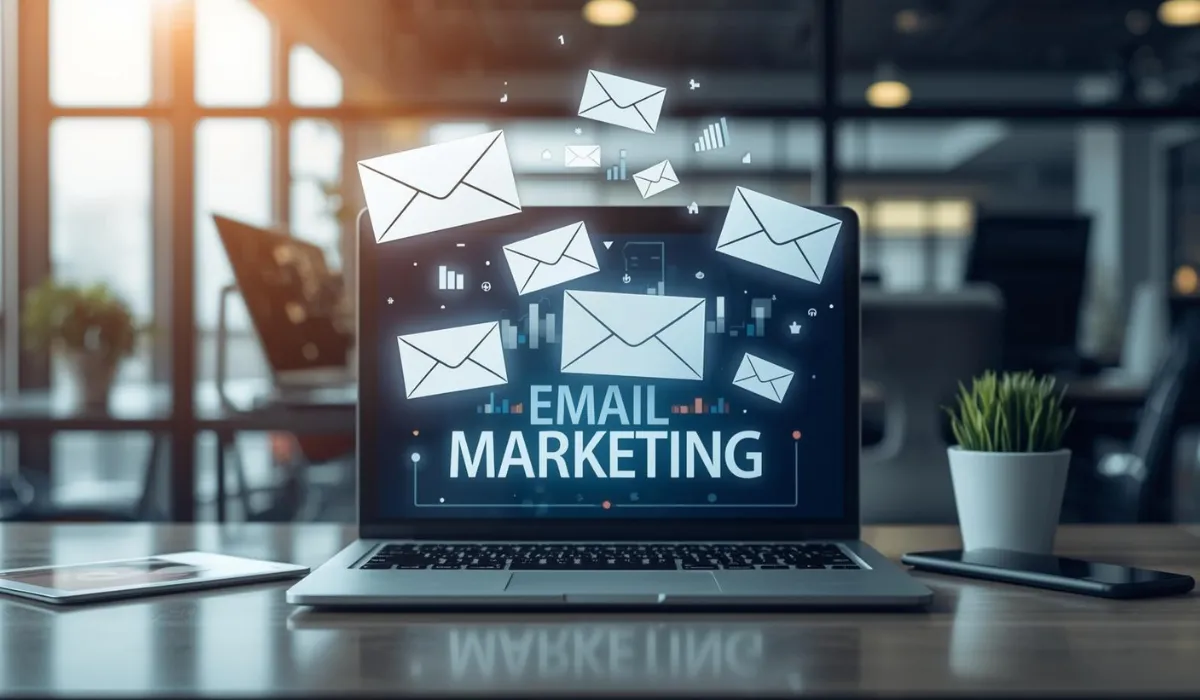
Email marketing remains, against all odds, one of the most profitable and effective digital marketing channels. As social networks become saturated and algorithms are constantly changing, email maintains its essence: a direct and voluntary conversation between brands and people. In 2026, this conversation has become more intelligent, more personalized and, paradoxically, more human thanks to technology.
What makes email marketing special today is that it operates in an ‘owned audience’ environment. Unlike what happens in Instagram, TikTok or Google, where you pay to access an audience that does not belong to you, your mailing list is an asset that no one can take from you. No matter how much the algorithms change: if you have the emails of your subscribers and a trusted relationship with them, you can communicate without intermediaries.
But 2026 brings a novel challenge: Now you not only compete against other brands for the attention of the user, but against the artificial intelligence assistants themselves who filter, summarize and prioritize emails on their behalf. Gmail, Apple Mail, and Outlook customers integrate more and more AI features that decide what deserves to be seen and what happens to be forgotten. Therefore, the strategies that worked two years ago may not serve today.
In this full article (over 2,500 words) you will discover what email marketing really is, how it works in depth, and what are the best data-backed practices to stand out in the 2026 inboxes.
What is email marketing?
Basic definition
Email marketing is a digital communication strategy that uses email to send commercial, informational or transactional messages to a group of people who have given their explicit consent to receive them. Unlike spam (unsolicited), email marketing is permission-based: Every person on your list has voluntarily decided that you want to hear what you have to say.
This consent is formalized through the opt-in, which can be simple (the user leaves his email) or double (also confirms in a verification email). The double opt-in has become the quality standard in 2026 because it guarantees that the addresses are valid and that the interest is genuine.
What is email marketing for in 2026?
We live in the era of ‘zero-click’ searches. According to recent studies, approximately 60% of Google searches from mobile devices end without the user clicking on any result, because the answer already appears on the search page itself. This means that relying exclusively on organic traffic from search engines is increasingly risky.
Email marketing is exactly that: To have a direct channel that does not depend on intermediaries. When you send an email, you arrive directly in your subscriber’s inbox. There is no algorithm that decides whether to show you or not, you don’t have to pay for each print. It’s yours and your audience.
The main uses of email marketing include:
- direct sales: Promote products or services with clear calls to action.
- Lead Nutrition: Accompany potential clients in their decision process.
- loyalty: Maintain contact with existing customers to repeat.
- Information: Share news, educational content or updates of the company.
- Dealings: Purchase confirmations, invoices, shipping notifications.
History and evolution of email marketing
The first mass email for promotional purposes was sent in 1978 through ARPANET (the predecessor of the Internet). Since then, the channel has evolved enormously:
- 90s and 2000s: Email marketing was basically ‘massive shipment’. The brands bought databases and sent the same message to everyone, without segmentation. It was the age of spam.
- 2010-2020: Specialized platforms appear (Mailchimp, , brevo, etc.) and concepts such as segmentation, automation and advanced metrics. GDPR in Europe marks a before and after by requiring explicit consent.
- 2021-2025: Privacy becomes priority. Apple launches Mail Privacy Protection (MPP), which hides the actual openings. Google and Yahoo impose mandatory authentication requirements. AI begins to be integrated into the tools.
- 2026: We are in the age of Smart inbox. AI not only helps create emails, but acts as a filter for the receiver side. 64% of marketers already use artificial intelligence in their mail campaigns, and adoption is expected to reach 97% by 2030. The competition is no longer only against other brands, but against attendees who decide for the user what deserves their attention.
How does email marketing work?
The operation of email marketing goes far beyond ‘writing an email and giving it to send’. It implies a technical infrastructure, a content strategy and a deep knowledge of the audience.
Types of emails
In 2026, experts distinguish various categories of emails, each with specific objectives and characteristics:
1. Promotional emails: They are looking for a direct conversion (a purchase, a record, a download). They usually include very clear offers, discounts or calls to action. According to sector data, abandoned cart emails have an average opening rate of 49.89% and generate an average income of $3.58 per recipient, almost double the average of other campaigns.
2. Newsletters (newsletters) : Its main objective is to add value, not to sell directly. share useful content, industry news, Blog articles, etc. They are the basis of the loyalty strategy. The recommended frequency is 1 to 2 per week, since sending more dramatically reduces engagement.
3. Transactional emails: They are activated by a user action. They include order confirmations, shipping notifications, password recovery, etc. They have the highest opening rates (they can exceed 80%) because the user expects to receive them.
4. Automated emails (Lifecycle Campaigns) : They are sequences designed to guide the user in their relationship with the brand. For example, a welcome series for new subscribers, reactivation emails for inactive users, or post-purchase personalized recommendations. Automations represent only 2.6% of emails sent, but generate 46.9% of mail sales.
5. Enriched transactional emails: An evolution of transactionals that include personalized recommendations, dynamic content and interactive elements while still fulfilling their main function.
Key Concepts You Should Master
Opt-In and Preference Centers 3.0: The double opt-in is the quality standard. But in 2026 we go further with advanced preference centers. It is no longer enough to ask ‘Do you want to receive our emails?’. Now subscribers can choose the frequency (daily, weekly, only important novelties), the topics that interest them and the type of content they prefer. This not only improves the experience, but also feeds the strategy with valuable data (Zero-Party Data) that the user voluntarily shares.
Segmentation: It is the process of dividing your contact list into smaller groups with common features. Modern segmentation is dynamic and is based on real-time behavior: purchase history, interactions with previous emails, pages visited on the website, etc. .
Automation: It consists of programming sequences of emails that are sent automatically based on specific triggers (a subscription, a purchase, a cart abandonment, a special date). Automated campaigns achieve opening rates of 42.1%, compared to 25% of traditional massive campaigns.
Authentication (SPF, DKIM, DMARC, BIMI) : These technical protocols have gone from being recommended to being Mandatory Since Gmail and Yahoo demanded them for any sender who sends more than 5,000 emails a day. Basically, they show that it’s really you who sends the mail and not a supplanter. Bimi goes one step further: it allows you to show your brand logo next to email in compatible clients, increasing trust and opening rate.
main metrics: those that matter and those that do not
Traditionally, the Open Rate It was the queen metric. But in 2026, its reliability is in question. Apple’s privacy protection (Mail Privacy Protection) preloads images in background emails, which records fake openings. This has artificially inflated opening rates and has made them unreliable to measure actual engagement.
The metrics that really matter now are:
| Metrics | Formula | What does it indicate? | Benchmark 2026 |
|---|---|---|---|
| CTR (Click-Through Rate) | (Total / Delivered Clicks) × 100 | actual interaction with content | 3.7% global |
| Unique CTR | (Single Clicks / Delivered) × 100 | Percentage of people who clicked (not counting repeated clicks) | 1.4% |
| ctor (click-to-open rate) | (Total Clicks / Openings) × 100 | Effectiveness of the content among those who opened | 3.7% |
| conversion rate | (Conversions / Delivered) × 100 | Percentage that completed the objective (purchase, registration, etc.) | 5.1-10% according to industry |
| ROI (Return on Investment) | (Income – Investment) / Investment | channel profitability | $40 for every $1 invested |
| Low rate | (Low / Delivered) × 100 | Dissatisfaction with frequency or relevance | <0.25% |
| SPAM RATE | (Spam Complaints / Delivered) × 100 | Negative perception of your emails | <0.1% |
key data: 43% of consumers are unsubscribed from a list because they receive too many emails. Frequency matters, and a lot.
Advantages of email marketing
Why keep investing in email marketing when there are so many new channels? The data is strong.
High return on investment (ROI)
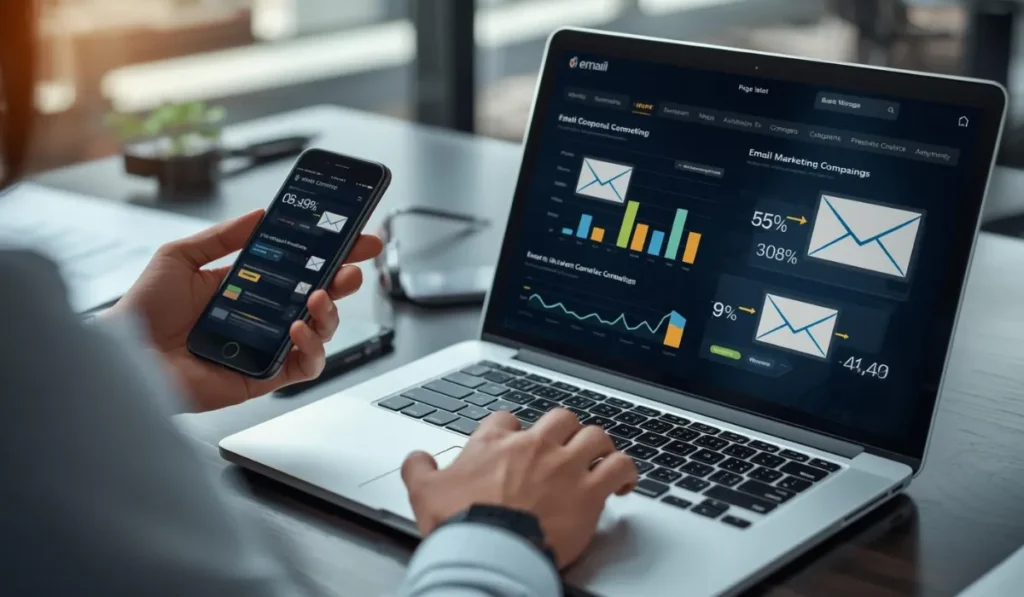
Email marketing remains the best ROI channel in the Digital Marketing. According to the Litmus study cited by Backlinko, for every dollar invested in email marketing, brands in the United States get an average return of $40. In the European Union, the figure amounts to $43. Companies that perform A/B tests systematically reach an ROI of $48 for each dollar.
Compared to other channels:
- Email Marketing: $40 for every $1
- Paid search: $22 for every $1 (estimated)
- Social networks: $12 for every $1 (estimated)
In addition, email marketing contributes approximately to 11% of all e-commerce sales.
Deep customization and segmentation
Email customization capability is unrivaled. It is not just about putting the name of the recipient (something that, by the way, no longer improves the CTR, according to GetResponse data: the CTR falls from 4.45% to 3.18% when only the body is personalized without further strategy).
True customization in 2026 implies:
- dynamic content that changes according to the segment.
- Product recommendations based on previous purchases.
- Exclusive offers for members of the loyalty program.
- messages adapted to the moment of the customer’s life cycle.
Brands that use dynamic content on a regular basis report an ROI of $44 for each dollar, compared to $36 for those who do not use it.
Loyalty and engagement
59% of consumers claim that email marketing influences their purchase decisions. In addition, 83% of consumers prefer to receive hyperpersonalized messages.
Welcome emails have an opening rate of 83.63% and a CTR 5.1 times higher than a conventional newsletter. This shows that the moment of entry into the relationship with the brand is critical and that email is the ideal channel to manage it.
How to create your first email marketing campaign
If you are starting, follow these structured steps. It is not about launching to send without planning.
Definition of objectives (Smart)
Before writing a single line, ask yourself: What do I want to achieve with this campaign? The objectives must be specific, measurable, achievable, relevant and temporary (Smart).
Examples of targets for 2026 :
- eCommerce store: Increase the conversion rate of the campaigns from 1.2% to 2% in the next 6 months.
- NGO: Increase the click rate to donation pages from 3% to 5% before December.
- Restaurant: Reach an opening rate of 30% on weekly bulletins during the first quarter.
Construction and growth of the list (quality over quantity)
Your mailing list is your most valuable asset. Building it correctly is the basis of everything.
Not purchase databases. It is the fastest way to spam, complaints and damage the reputation of your domain forever.
Yes Use ethical methods to attract subscribers:
- Subscription forms on your website (with clear check boxes).
- Downloadable content offers (lead magnets) in exchange for email.
- Smart pop-ups that don’t interrupt the experience.
- Registration at the point of sale (for physical businesses).
Always apply the double opt-in: The user receives a confirmation email and must click to subscribe. This filters out misdirections and guarantees genuine interest.
It includes from the beginning a Preference Center where the new subscriber can choose frequency and themes. This will reduce future lows.
Tool selection
Choosing the right platform (ESP, Email Service Provider) is crucial. In 2026, the tools must offer:
- Ease of use: Intuitive editor, pre-designed templates.
- Technical compliance: Automatic Authentication Management (SPF, DKIM, DMARC).
- integrated AI: Content Generation, Subject Suggestions, Shipping Optimization.
- Advanced segmentation: Based on dynamic behavior and data.
- full analysis: Clear reports with the metrics that really matter.
- INTEGRATIONS: With your website, CRM, online store, etc.
Some known options are brevo (formerly SendinBlue), Mailchimp, GetResponse, or SiteGround Email Marketing, which integrates hosting and email on the same platform.
Automation and basic flows
Once you have list and tool, set up essential automations. These flows work for you 24/7 :
- Welcome series: 3-4 emails that are sent automatically upon subscription. They present the brand, offer value and guide the first steps.
- abandoned cart: For eCommerce. It is activated when a user adds products to the cart but does not complete the purchase. Opening rate: 49.89%.
- post-purchase: Acknowledgment, complementary product recommendations, review request.
- Reactivation: For subscribers who have not opened emails in 3-6 months. Try to regain your interest before you drop them off.
- Birthday/Anniversary: Personalized messages with special offers. 53% of consumers like these details.
Strategies and best practices for 2026
Here are the tactics that really work this year, backed by data.
Effective segmentation
Segmentation is no longer optional. Send the right message to the right person at the right time. Some essential segmentation criteria:
- demographic data: age, location, gender (basic but useful).
- Purchasing history: What did they buy, when, how often.
- Email behavior: What emails they open, which links they click on.
- Engagement level: Active, inactive, new, recovered.
- explicit preferences: The ones they themselves indicated in the Preference Center.
Segmentation allows micro-segments that respect privacy and improve relevance.
Advanced customization (beyond name)
As we saw, putting the name on the subject is no longer a guarantee of success. Effective customization in 2026 is contextual:
- product recommendations: Based on previous purchases or recent browsing.
- dynamic content: Different blocks within the same email according to the segment.
- EXCLUSIVE OFFERS: Based on customer status (new, recurring, VIP).
- Helpful reminders: ‘Your subscription is renewed in 7 days’, ‘You have points left to redeem’.
Brands that they personally personally see an increase of 22% in ROI.
Design and copywriting for 2026
Mobile-first design: Between 41% and 55% of emails are opened on mobile devices. If your email doesn’t look good on an iPhone, you’re losing more than half of your audience.
Mobile-First design golden rules:
- Column design: Fits perfectly on small screens.
- large buttons: Minimum 44×44 pixels, easy to press with your finger.
- legible source: 14-16 pixels minimum.
- high contrast: Text on background that reads well with any light.
- 60/40 rule: 60% text, 40% images. Mail clients block default images; If your message depends on them, they won’t see it.
Copywriting that convinces:
- Matter: 20-40 characters, without words spam, generating curiosity or urgency. Emoji issues have yields similar to those that do not use them (37.5% vs 42.23%), but they can help visually stand out. Including the word ‘newsletter’ reduces the aperture by 18.7%.
- Preheader: That text that appears next to the subject. Don’t leave it automatic. Use it to complement the issue and add context. Well used can increase the aperture between 10% and 30%.
- Scanable content: Short paragraphs, lists, bold. 43% of Americans prefer simple and easy to scan emails.
- a single main CTA: Do not confuse the reader. If you want them to click on a button, then there is only one featured button.
How to avoid spam folder in 2026
Getting to the inbox is the first and most important step. If you don’t get there, nothing else matters.
Critical Factors for Deliverability :
- Authentication: SPF, DKIM and DMARC configured correctly. Not negotiable.
- Clean list: Regularly removes directions that bounce (hard bounces) and those that have been inactive for a long time.
- non-spam content: Avoid misleading issues (‘You have won…’, ‘Urgent’), excess capital letters, repeated exclamation marks and too promotional language.
- Gradual volume: If you haven’t sent in a while, don’t send 100,000 emails at once. Heat the IP by increasing the volume progressively.
- Easy lows: Always includes a low visible and functional link. If the user does not find how to unsubscribe, it will mark as spam.
- text on images: Do not put your main message inside an image. Filters do not read it and users with blocked images do not see it.
The spam rate should not exceed 0.1%. Above, providers can start blocking your shipments.
Common mistakes and how to avoid them
Even professionals make mistakes. Identify them and avoid them.
Error 1: Being obsessed with open rates
We have already said it: Apple MPP has broken the reliability of the Open Rate. However, many marketers continue to make decisions based on this distorted metric.
Solution: Change focus to CTR, conversions and revenue. The Open Rate may be helpful in comparing A/B testing issues within your own audience, but don’t use it as the successful main KPI.
Error 2: Send unsegmented (Batch and Blast)
The ‘send the same thing to everyone’ approach is dead. Users expect relevance. If you don’t segment, you’ll have more lows and more spam complaints.
Solution: Use the data you have. Start with simple segmentations (men/women, buyers/non-buyers) and go refining .
Error 3: Ignore list hygiene
Having addresses that bounce or users that never open damage your reputation as a sender. Providers see that you send people who do not interact and can start filtering your emails.
Solution: Perform periodic cleaning (every 3-6 months). For inactives, launch a reactivation campaign. If they don’t respond, delete them.
Error 4: Inadequate frequency
43% of casualties are due to receiving too many emails. But it can also be bad to send very little and that you forget.
Solution: Ask your subscribers what frequency they prefer in the Preference Center. Respect your choice. As a general rule, 1 email per week has the highest opening rate (33.8%), while 2 emails drop to 30.1%.
Error 5: neglect authentication
Many small businesses do not yet have SPF, DKIM and DMARC configured. In 2026, this is like not having a responsive web.
Solution: If you use a quality email marketing platform, they will help you with the settings or do it automatically. Make sure it is.
Error 6: Mis interpreting metrics
CTR is not the same as single CTR. The normal CTR can be inflated by a few users who click many times. The unique CTR tells you how many different people interacted.
Solution: Familiarize yourself with each metric and use the one that best responds to your goal. To measure the scope of your message, the unique CTR is more relevant.
Frequently Asked Questions (FAQ)
What is a good opening rate in 2026?
It depends on the industry. DotDigital data puts the global mean at 55.4% (total openings) and 37.3% (unique openings). However, brevo It offers a more conservative figure of 21.89% on average, and Backlinko speaks of 35.63%.
This variation is due precisely to the lack of reliability of the metric. The most sensible thing is:
- compare yourself with your own historical average.
- Consult Benchmarks of your sector (eCommerce, 32.67%; Consulting, 45.96%; NGOs, 52.38%).
- Do not take the Open Rate as absolute truth, but as a trend.
How many emails should I send per week?
There is no single answer. The optimal frequency is what each subscriber has chosen for himself. If you give them a choice, some will choose daily, others weekly, others monthly.
Statistically, 1 email per week You get the best opening rate (33.8%) and the best CTR (5.71%). With 2 weekly emails, Open Rate drops to 30.1% and CTR at 4.73%.
The key is consistency and quality. Better an excellent email a week than five mediocres.
What is the difference between Email Marketing and Newsletter?
Although used as synonyms, there are important nuances in 2026:
- Newsletter: It is a specific type of email marketing. It refers to periodicals (usually with a fixed frequency) that offer valuable content, curatorship of news, articles, etc. Its main objective is to inform and maintain contact, not sell directly.
- Email Marketing: It is the umbrella that encompasses everything: newsletters, promotional, transactional, automation, etc. It is the complete mail communication strategy.
Massive and poorly segmented newsletters are on the decline. Modern email marketing is a personalized communications ecosystem where the newsletter is just one more piece.
Is email marketing still profitable?
Absolutely yes. With a ROI of $40 for every $1 invested, it surpasses any other digital channel. In addition, 59% of consumers say that emails influence their purchase decisions.
What role does AI play in 2026 email marketing?
a central role. 64% of marketers already use AI in their campaigns. The main applications are:
- content generation and issues.
- predictive customization.
- Optimization of the time of shipment.
- Advanced segmentation.
- Results analysis.
The emails created with AI achieve CTR of 13.44%, compared to 3% of those who do not use AI.
Conclusion
Email Marketing in 2026 is a mature, technologically advanced and more profitable channel than ever before. The keys to success are clear:
- Build your own quality list, with explicit permission and preference centers.
- Master the technical part: Authentication, Deliverability, List Cleaning.
- segment and customize Relevantly, using behavior data and preferences.
- Design for mobile First and write in mind the scanability.
- Automate essential flows (Welcome, abandoned cart, post-purchase).
- measure what matters: CTR, conversions, income. Forget the obsession with open rates.
- Take advantage of AI As an assistant, not as a substitute for human criteria.
The inbox is one of the most personal spaces out there. Reaching it is a privilege that we must honor with relevance, respect and courage. Those who do well in 2026 will continue to reap the fruits of a channel that, far from dying, has reinvented itself to be stronger than ever.
Has this article been useful to you? Share it with other marketing professionals and help them improve their email campaigns in 2026.